


Select your Market
-
{{ userContent.title }}

{{ userContent.lookingForMoreLabel }}


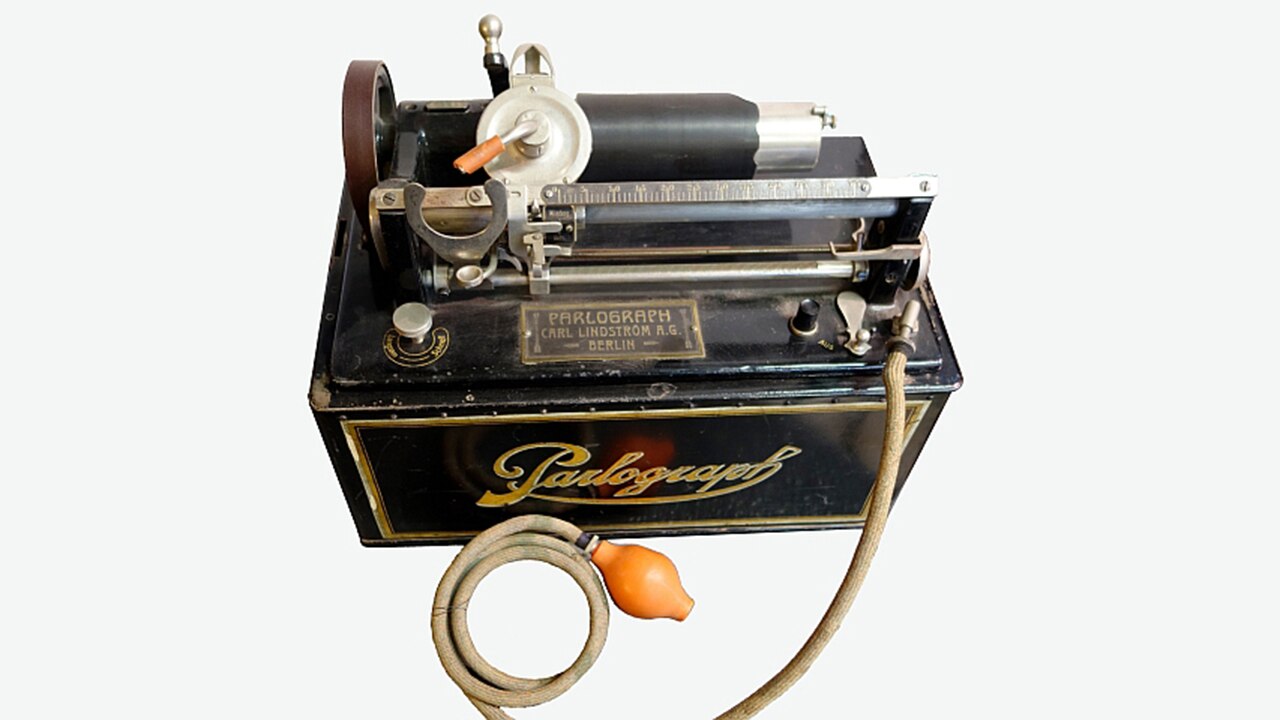
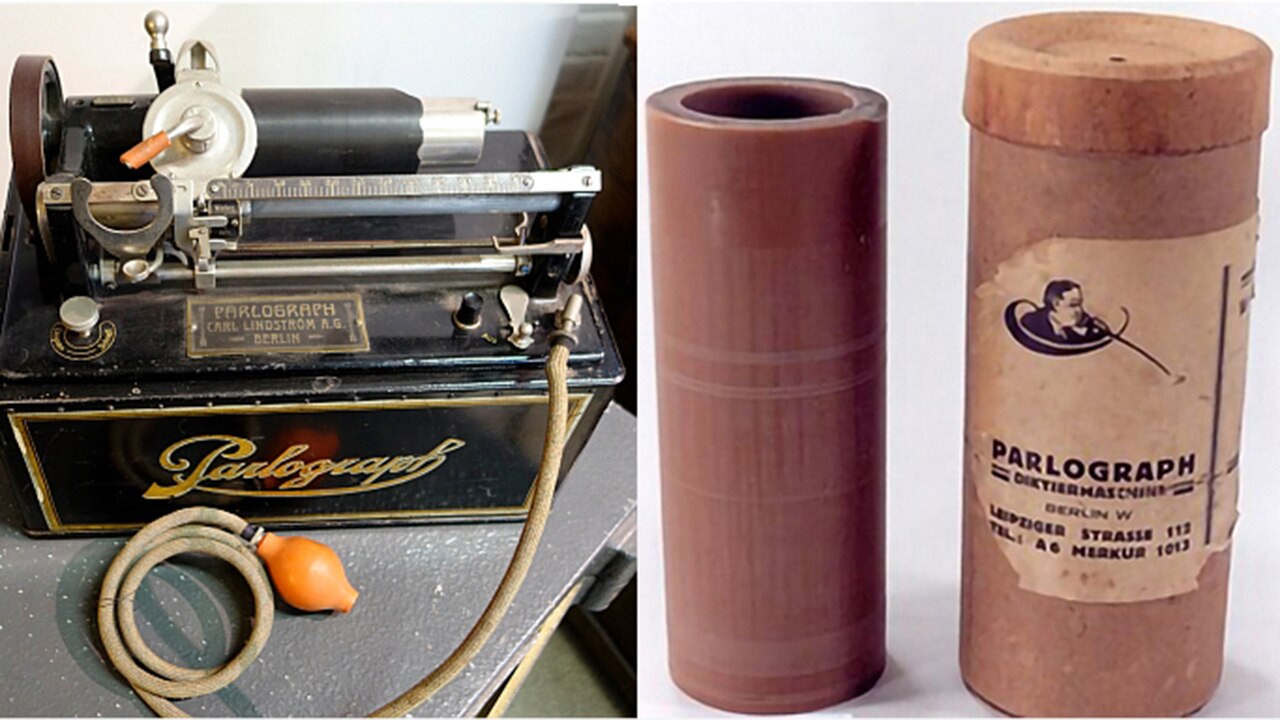
Parlograph, early 20th century
textblock default title
These days, dictation machines can be found in every handbag and trouser pocket. But the predecessor, which was invented at the beginning of the 20th century and weighs around 17 kg, couldn’t possibly fit in there.
As unwieldy as it seems nowadays, the parlograph represents a streamlining of office work and a decoupling of work processes from physical presence over 100 years ago.
And both of these topics are still relevant today. An advertisement by the Berlin-based company Carl Lindström A.G. promised buyers of the parlograph crucial streamlining advantages: “50% time savings = 100% profit, absolutely reliable, always ready to record, indispensable; for every office, every lawyer, every scholar, etc.”
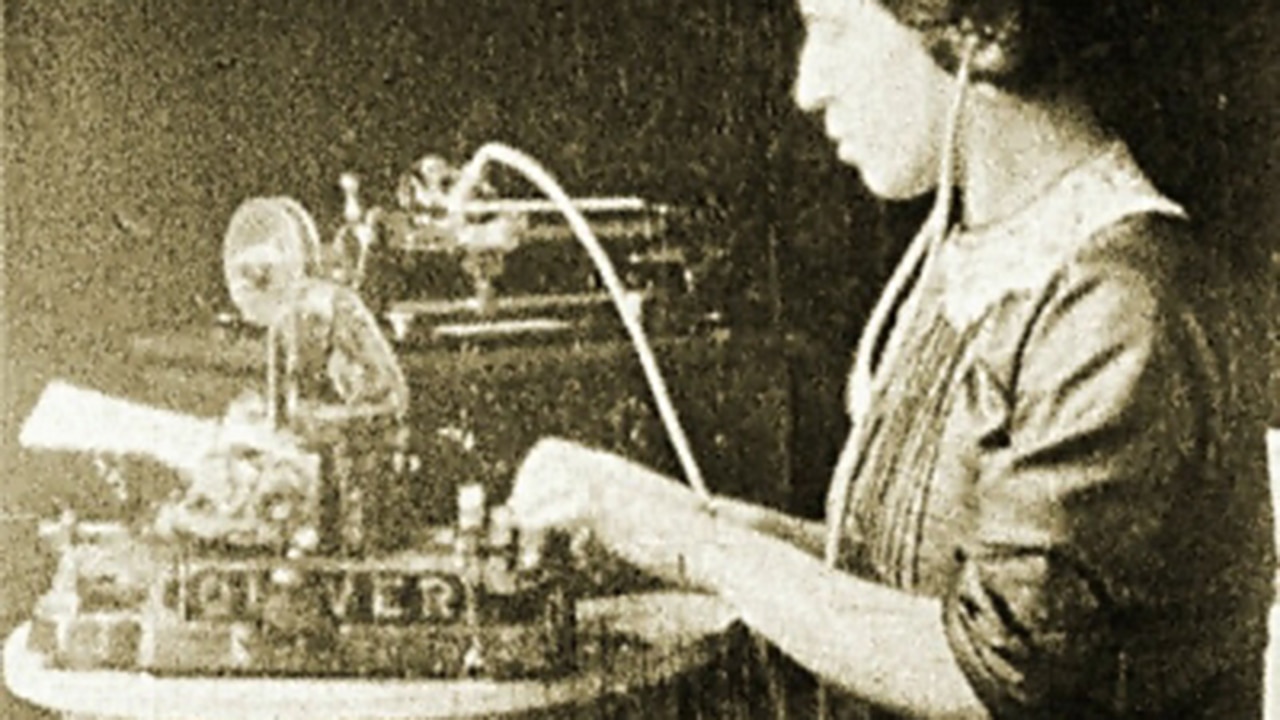
It was invented by Swedish engineer and industrialist Carl Lindström, who was living in Berlin. He developed the device based on Thomas Edison’s invention, the phonograph, and started manufacturing it in 1910. Felice Bauer, fiancé of author Franz Kafka, worked at Lindström’s company.
textblock default title
In the photograph, she is depicted typing up what was previously recorded on the storage media. The letters from her fiancé reveal a certain wariness of this new form of communication: “However, the idea of a parlagraph in Berlin and a gramophone in Prague having a little telephone conversation is actually quite sweet.”
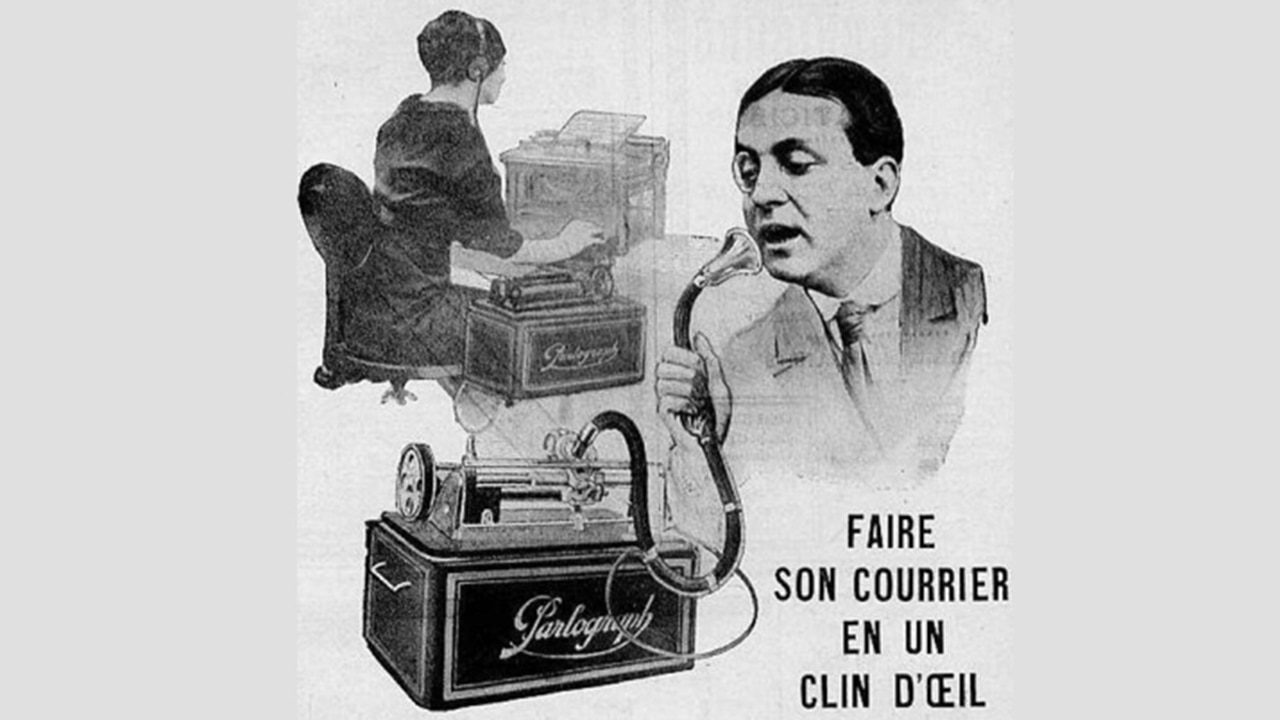
The entire work process was visually represented by an advertising poster in 1914. The boss dictates, the secretary writes. The single connection shown here on the device could apparently be used for talking and listening.
textblock default title
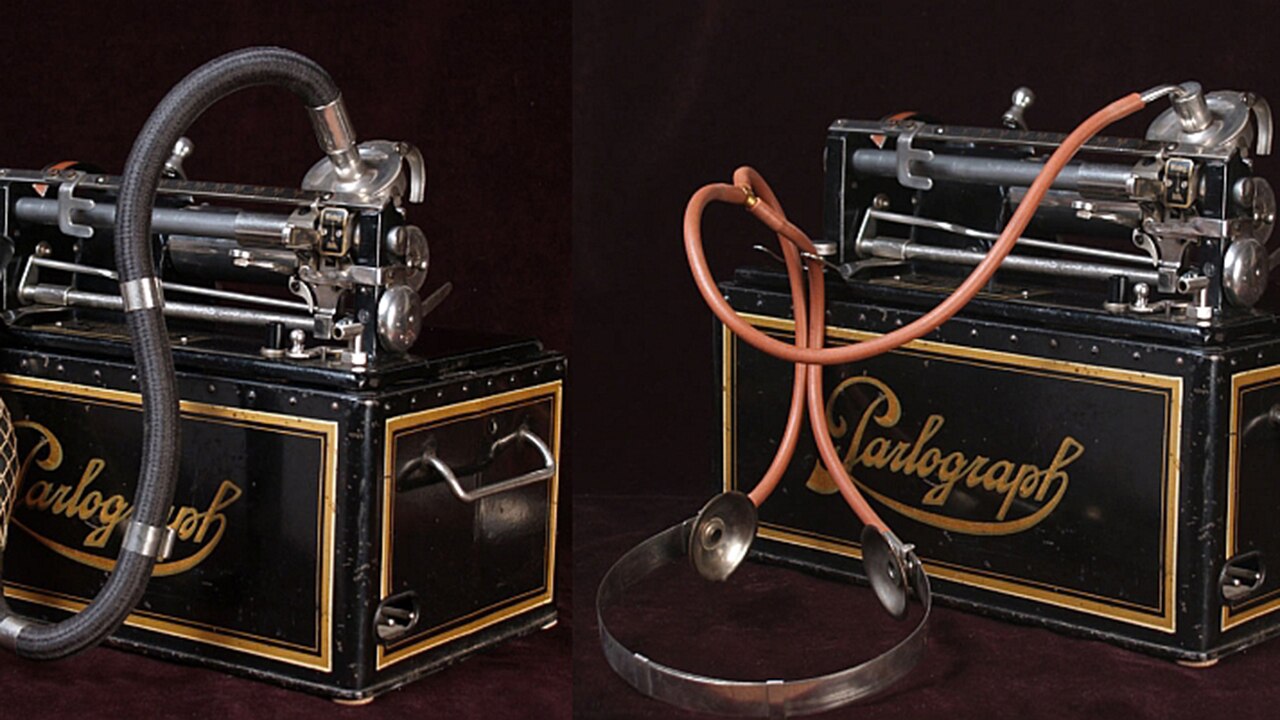
A secretary handbook from the 1950s retrospectively summarizes the recording and listening process. (At that time, magnetizable storage media such as audio tapes or magnetic discs had long been in fashion).
“The text had to be read aloud into a pipe, which had a mouthpiece as well as pneumatics, with which the dictation machine was started up and switched off. The pipe was connected to a membrane, which converted the sound into mechanical motion. This motion was engraved into the rotating wax cylinder by a cutting stylus. […]
textblock default title
[…] When the machine was set to playback, a scanning stylus read the grooves of the rotating wax cylinder. A membrane converted the mechanical motion back into sound vibrations, meaning the spoken text could be heard through a connected headset.
The parlograph had a dial, the degrees of which had to be indicated on an accompanying slip of paper with associated notations if the typist happened to notice anything. This was the case for improvements in particular. Back then, there was no “delete” button. The new text had to be subsequently read aloud on a free space on the wax cylinder. Therefore, it was necessary to indicate the degree for the beginning of the invalid text and the improved text.
The wax cylinders of the parlograph could be smoothed down, making it suitable for repeated use. By contrast, the recording media of other manufacturers could only be used once.”