


Select your Market
-
{{ userContent.title }}

{{ userContent.lookingForMoreLabel }}


Sample Collection, 1910
textblock default title
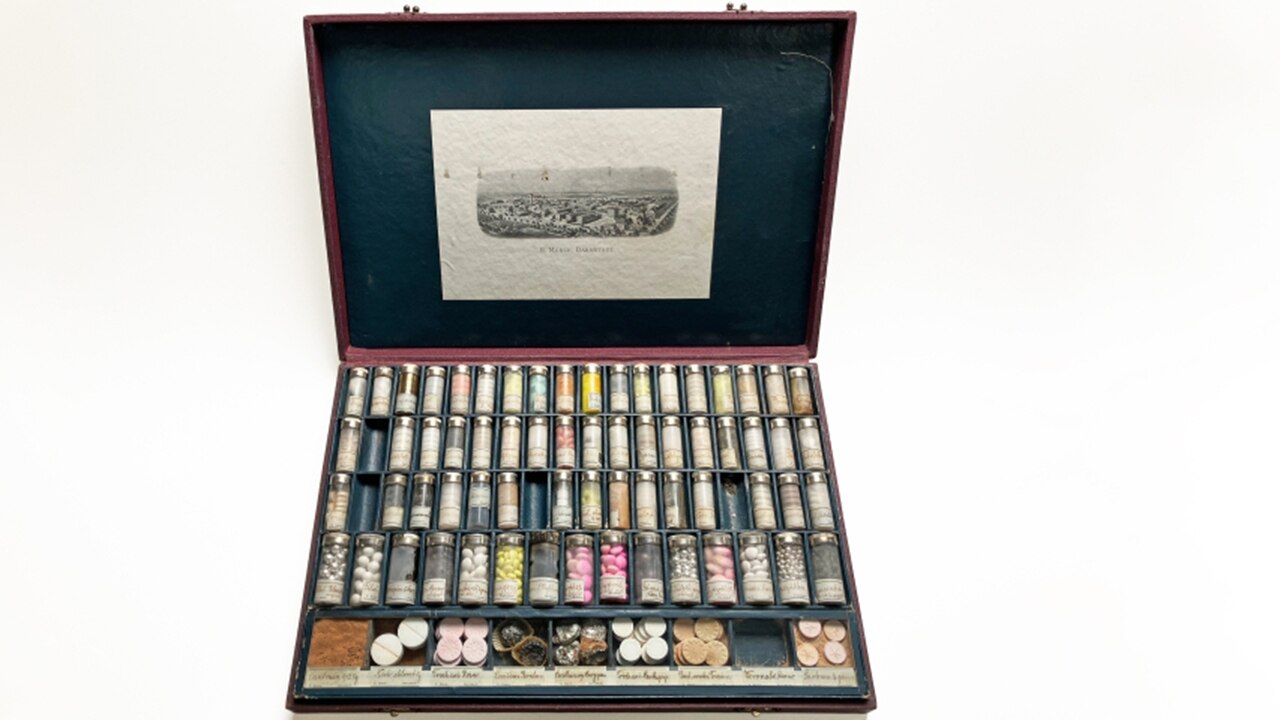
The wine-red box has space for 78 preparations of Merck KGaA, Darmstadt, Germany.
It is possible to date the box on the basis of the factory picture on the lid and the label design on the jars. Both were probably created around 1910.
There is no inscription on the outside of the box. The collection was probably intended to be shown at an exhibition, so the lid should be open. The individual containers are labeled by hand. The collection was obviously not intended to be put together in large numbers. It is possible that the collection was also intended as illustrative material for business associates who were guests at Merck KGaA, Darmstadt, Germany.
Medicines are included as well as reagents and photographic chemicals. What almost all of them have in common is that they are substances in solid form - pills, tablets, trochisci, powders. However, there is one exception: Iodipine is an oily substance.
Some exciting substances are presented below. Veronal, thebaine, barbituric acid and Eukodal have been disposed of, however. The Narcotics Act does not permit their preservation.
With a few exceptions, the areas of application are taken from the Merck's Index of 1910, a list published by the company itself of all preparations, drugs and minerals from its own range.
textblock default title
Medicinal products
Organ preparations
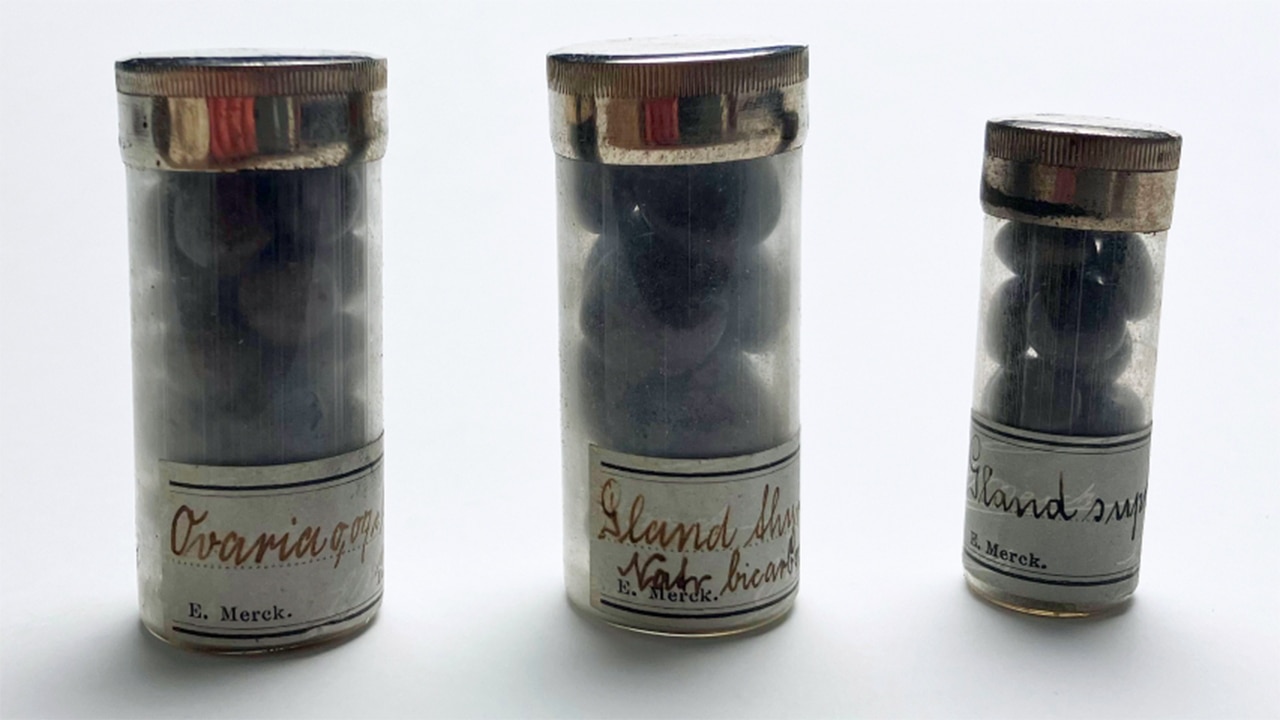
Pulver from ovarian tissue coated with cocoa
“Prepared from the ovaries of cows. Used as a specific for the complaints of natural and artificially induced menopause as well as for complaints after total or partial extirpation of the uterus and ovaries.”
Thyroid preparation with sodium bicarbonate
“From thyroid glands. Contains iodine bound in an organic compound. Used in myxoedema, cretinism, psoriasis, acute and chronic eczema, lupus ichthyosis, iodidiosyncrasia, dwarfism.”
Glandulae Suprarenalis
“Prepared from the adrenal glands of cattle and sheep. Preferably used in Addison's disease, diabetes insipidus and all diseases based on the loss of vasomotor tone, e.g. menopause, neurasthenia.”
textblock default title
Hemostyptics
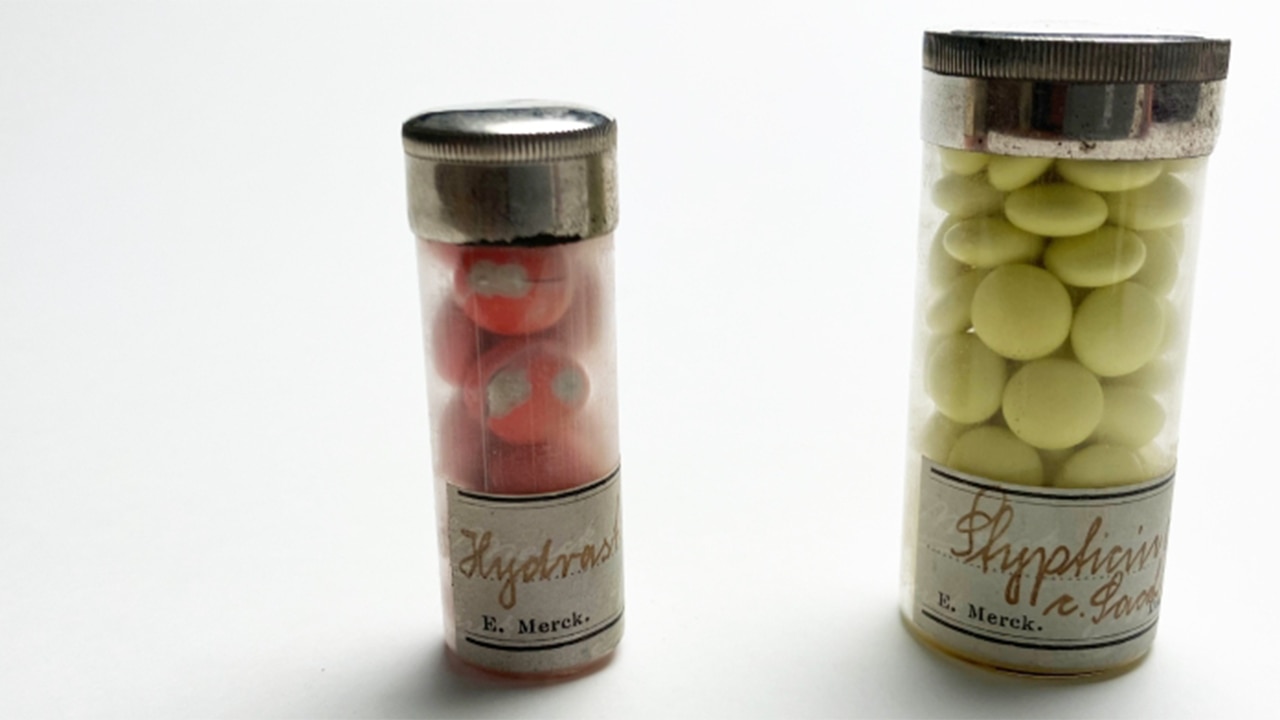
Hydrastis canadensis
“Rhizoma Hydrastis canadensis.Best. Hydrastine, berberine, canadine (alkaloids) Used as a hemostyptic for uterine bleeding.”
Stypticin coated with sugar
“Hydrochloric acid salt of cotarnine obtained from the opium alkaloid narcotine by cleavage and oxidation. Hemostatic, analgesic and sedative, particularly suitable for functional dysmenorrhea and menorrhagia of puberty and climax.”
textblock default title
Aphrodisiacs
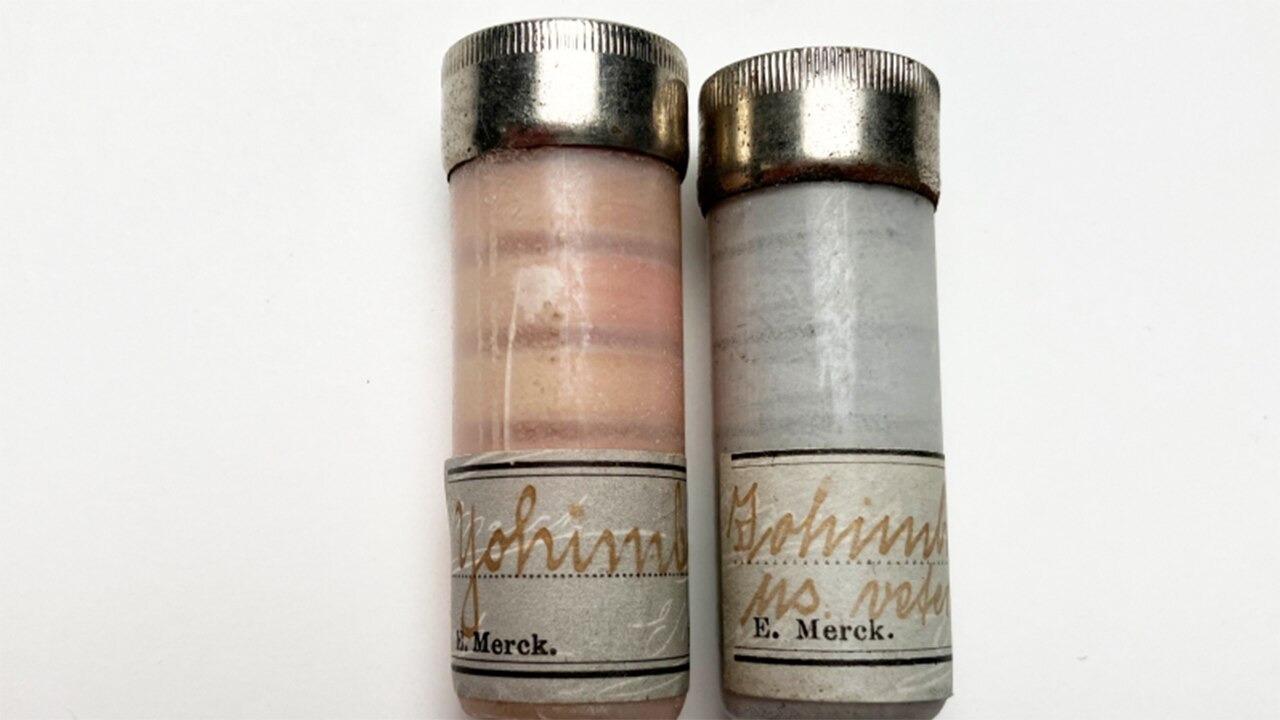
Johimbin ad usum veterinarium
“Yohimbine ‘Merck’. Hydrochloric acid salt of yohimbine, an alkaloid from the bark of Corynanthe yohimbe Schuhm. Strong aphrodisiac, used for impotence, especially the neurasthenic forms. Much used in veterinary medicine in recent years.”
textblock default title
Antianemics
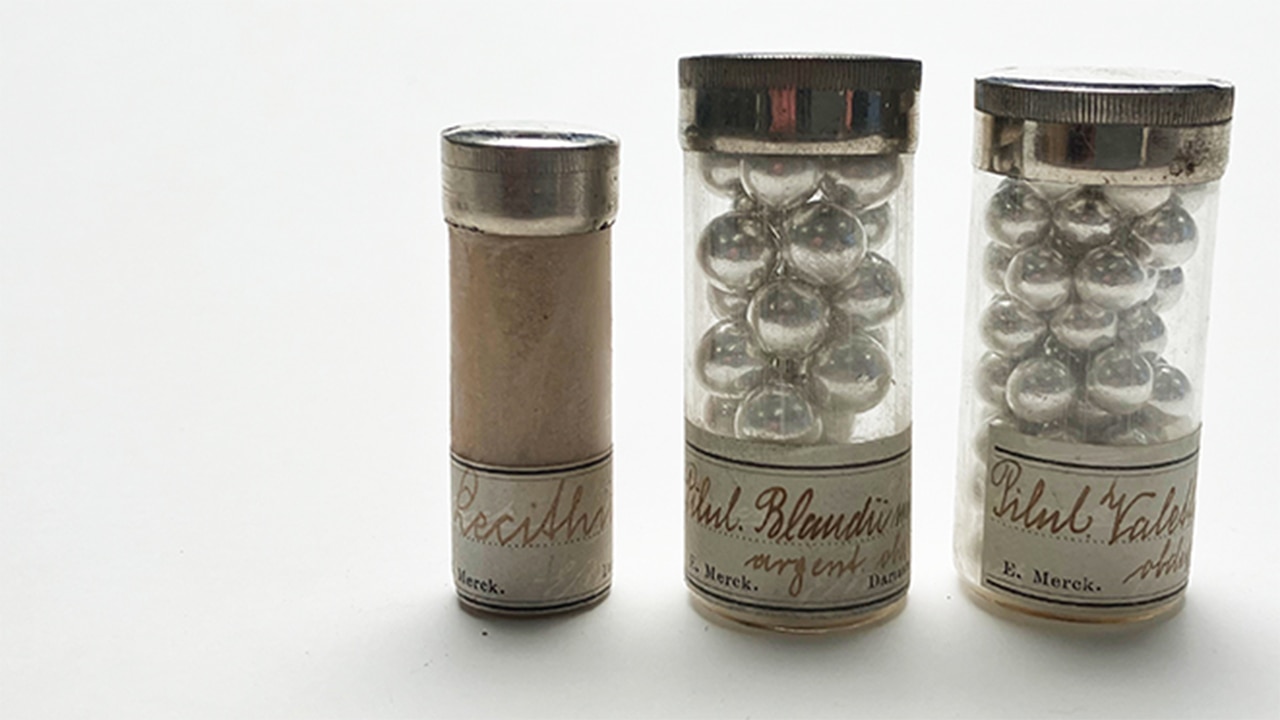
Lecithin
“The most important phosphorus-containing component of nervous tissue (brain matter), made from egg yolk. Excellent tonic for neurasthenia, various nervous diseases, tuberculosis, diabetes and nutritional disorders of all kinds”.
Small “Blaud's pills” coated with silver
“Pilulae Ferri carbonici Blaudii — Blaud's pills. Each pill contains approximately 0.028g iron. Dried ferrous sulphate 9.0 g, finely crushed potassium carbonate 7.0 g, finely powdered sugar 3.0 g, burnt magnesia 0.7 g, finely powdered marshmallow root 1.3 g, glycerine 4.0 g are processed into a mass from which 100 pills are made.” (Deutsches Arzneibuch, DAB 5, 1910)
Pilulae Valetti argentum obductum
“Massa pilularum Valetti (Valettian pill mass). The iron content corresponds to approx. 50 % ferrocarbonate. Tonicum. Used for anemia and chlorosis.”
textblock default title
Preparations against venereal diseases
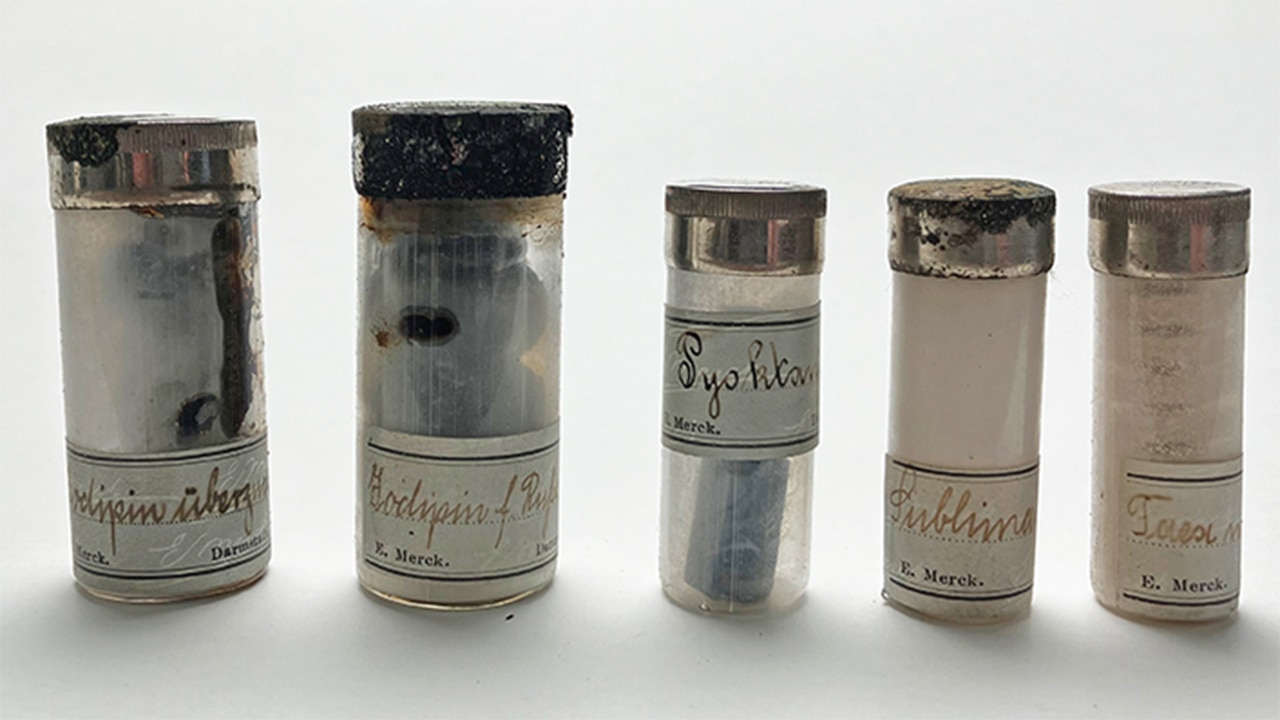
Iodipine f. Russia
“The tablets are intended for internal use, for all purposes that require iodine medication, especially for scrofulous and tertiary lues.”
Pyoktanin
“Antiseptic discovered by Prof. Dr. Stilling-Straßburg, until now used with excellent success in surgery, ophthalmology against throat and nasal diseases, syphilis, malignant neoplasms, etc.”
Sublimat rosa
“The sublimate pastilles according to Prof. von Esmarch are deliberately colored a weaker red than the usual small sublimate pastilles so that the laundry placed in their solution are not spoiled by red stains. They are particularly suitable for large-scale disinfection.”
Faex medicinalis 0,05 g
“Yeast, brewer's yeast. Externally on its own as Pv., mixed with water, in the form of sticks etc. for skin diseases, gonorrhea etc.”
textblock default title
Antipyretica in Malaria
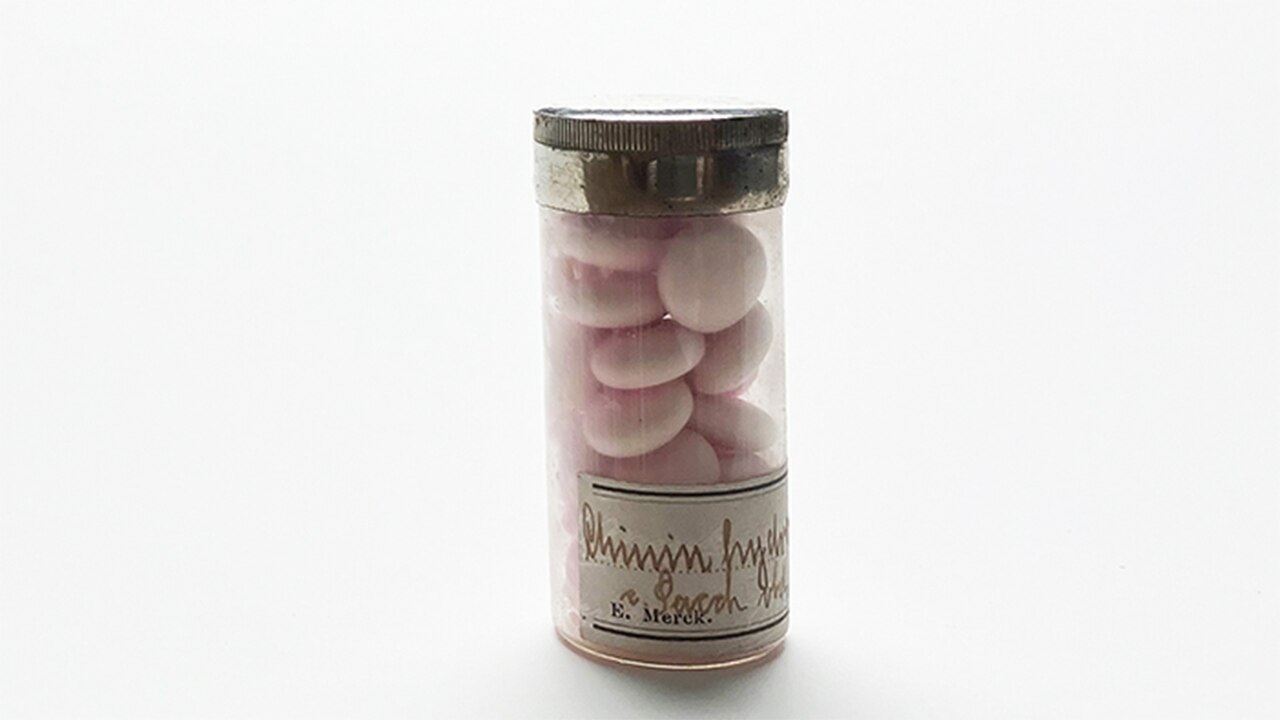
Chininum hydrochloricum
“Used like the sulfate. Antipyreticum, antisepticum. Used internally for all fevers, especially malaria.”
textblock default title
Antiepileptica
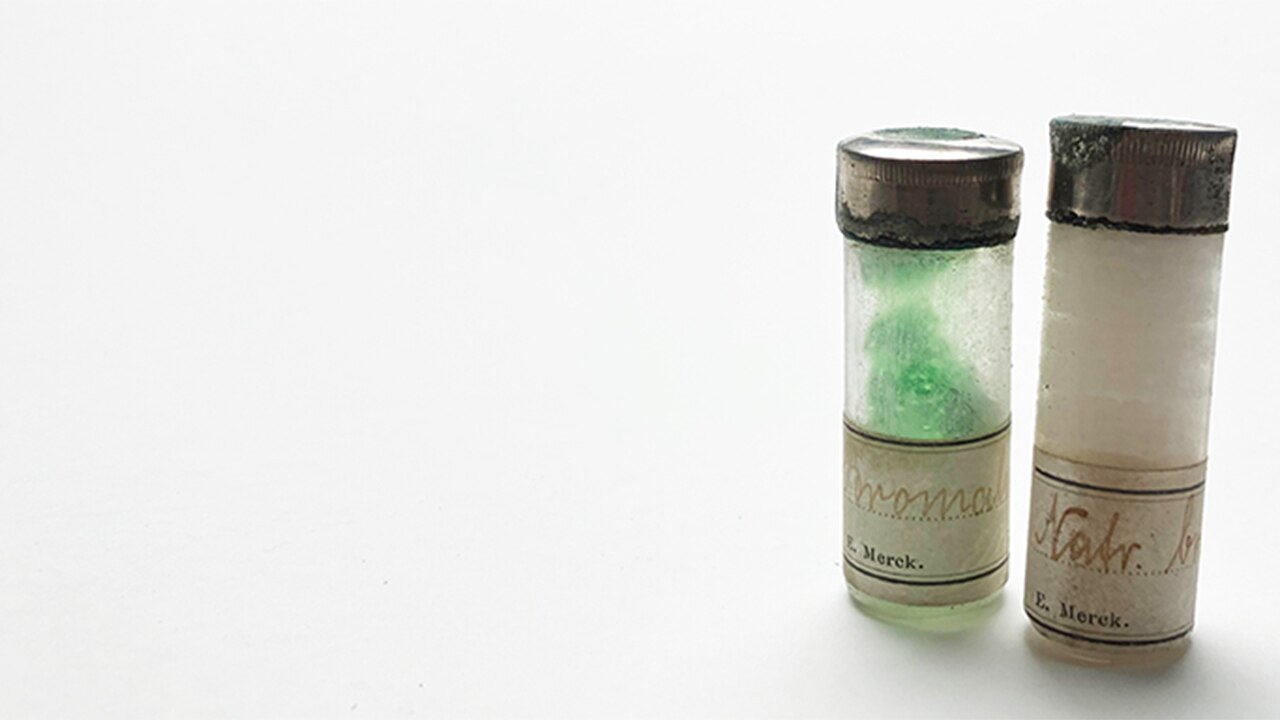
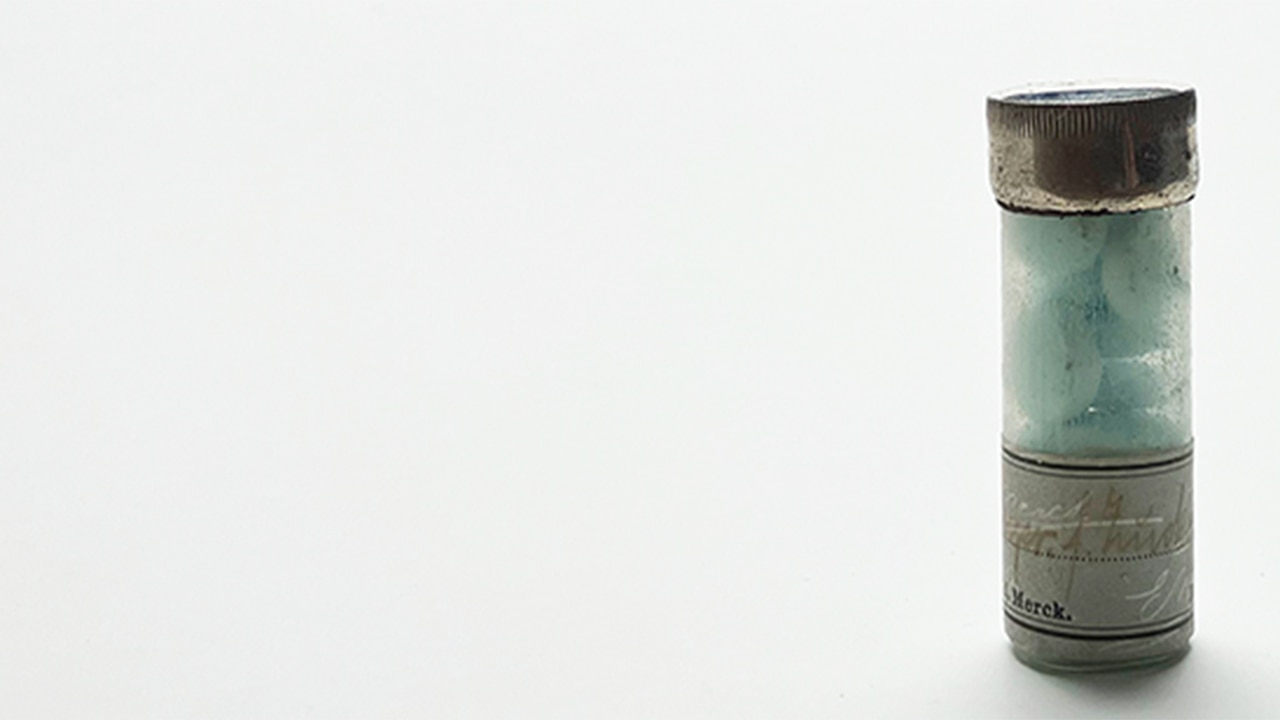
Natrium bromatum Sedative. Used for epilepsy
“Nervine sedative and antiepileptic. Does not have the unpleasant side effects of alkalisalts of bromine (bromism).”
textblock default title
Reagents
Cuprum for sugar determination
Tablets for the quantitative determination of sugar in urine
“Unlimited stable tablets, making the quantitative determination of sugar a very simple procedure. Two types of tablets are required:
1. copper tablets; one tablet contains as much copper salt as corresponds to the effective value of 0.01 g dextrose.
2. alkali tablets; one tablet contains the amount of alkali required for one copper tablet.
Sugar determination with these tablets requires no special analytical training, is easy and quick to learn, and has the great advantage of not requiring expensive
equipment.”
textblock default title
Photochemicals
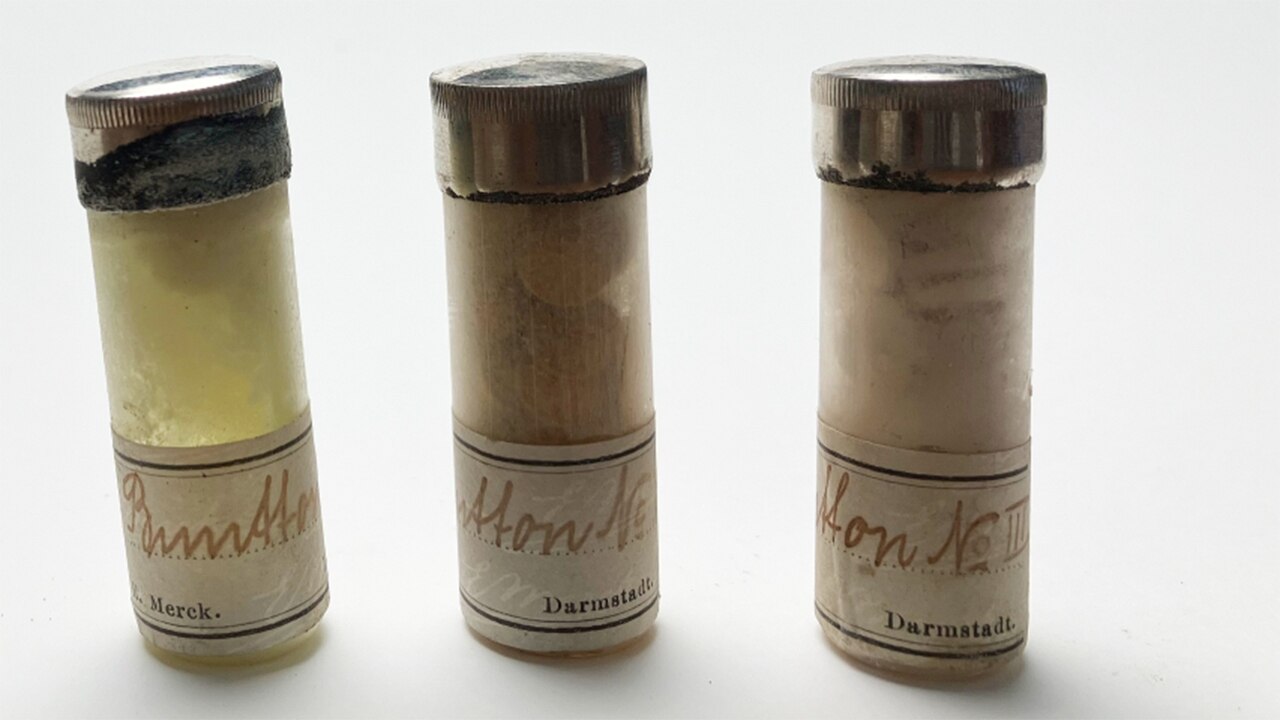
Buntton No. III
At the beginning of the 20th century, Merck KGaA, Darmstadt, Germany, offered a whole range of photographic chemicals. However, the Buntton tablets are only mentioned in the report of factory department XII for the 1903/04 financial year:
“The color toning tablets, all of which are easily soluble and have a good shelf life, should attract greater attention from the photographic public.”
It is not directly stated what is in each jar. A warm sepia tone could be produced with sulfur compounds. Furthermore, the images could be toned blue with iron compounds, reddish with copper compounds, and green with the application of iron and sulfur toners.