


Select your Market
-
{{ userContent.title }}

{{ userContent.lookingForMoreLabel }}


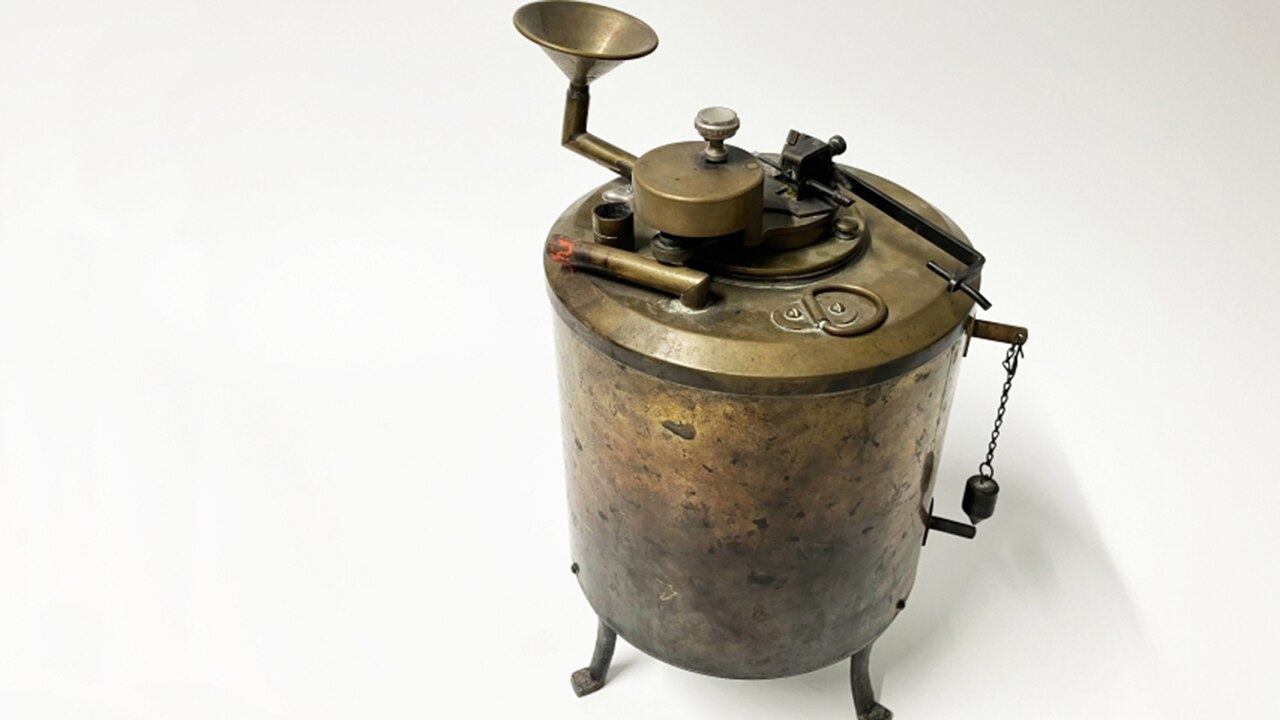
Abel petroleum tester, 1897
textblock default title
In the early years of petroleum lighting, petroleum was not subject to any standardization. Every manufacturer or merchant sold pretty much everything they deemed suitable for use in petroleum lamps under that designation.
In 1883, the imperial "Regulation on the Commercial Sale and Auction of Petroleum," came into effect in the German Reich.
In a time when electric lighting was still not widespread, such a regulation could prevent fires and save lives – both in residential areas and in a chemical factory. Petroleum that "emits flammable vapors" at temperatures below 21 degrees Celsius when the barometer reads 760 millimeters may therefore only be sold in containers that bear, in a eye-catching location on a red background, the clear, indelible inscription "Flammable." This is still far from current safety standards. Due to a different composition, today's petroleum has a flash point of at least 55 degrees Celsius.
The regulation accepts only the "Abel's Petroleum Tester" as evidence of flammability. If the test is conducted at barometer readings other than those mentioned above, an official government conversion table is available for assistance.
textblock default title
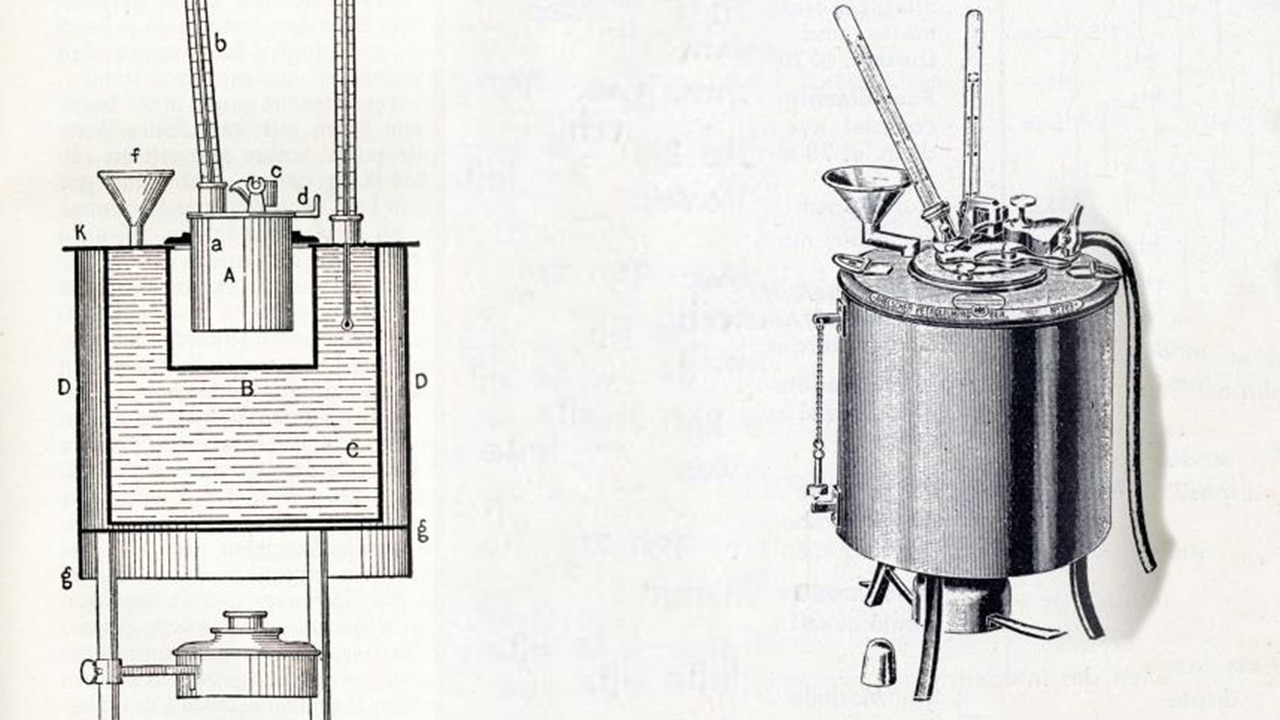
The inventor of the tester, officially presented in 1879, was the British chemist and explosives expert Frederick Augustus Abel (1827–1902).
When comparing the depiction in Meyer's Konversationslexikon from 1905 (left) with the catalog of the laboratory equipment supplier Müller & Krempel in Zurich from 1939 (right), not much seems to have changed at least externally. According to the laboratory catalog, the apparatus is supplied "with gas heating and gas ignition, complete with 2 thermometers: 10–50°C for the crucible and 50–75°C for the water bath."
textblock default title
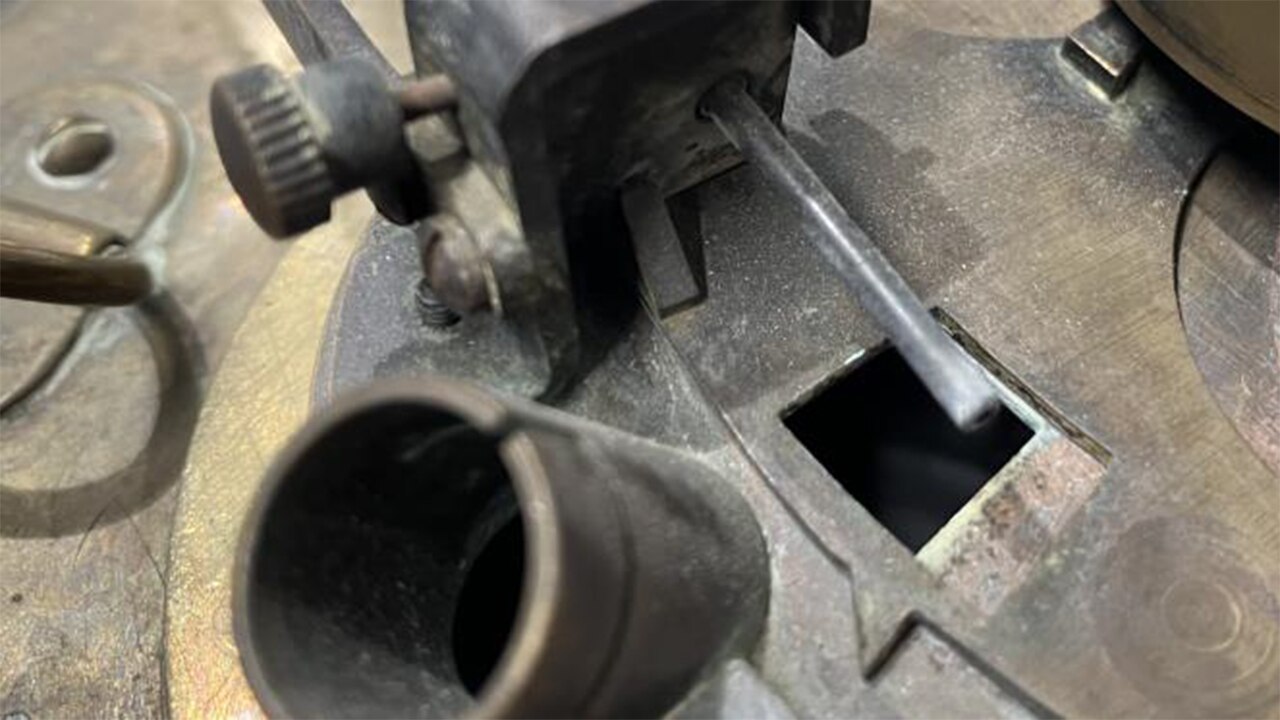
Dating the model present in Corporate History is challenging. The device lacks both a company plate and a type plate. The number “1147” is the only starting point. It might be the number on an "authentication certificate for Abel's
Petroleum Tester" issued by the "Imperial Standard Calibration Commission." For comparison, however, only the number 663 from the year 1883 is available.
It is therefore possible that the testing device originates from the company's first factory located in the eastern part of Darmstadt. On the other hand, the model looks very similar to the depiction in the catalog of the laboratory equipment
supplier. Thus, the age of the device is likely to be somewhere between 85 and 120 years.