


Select your Market
-
{{ userContent.title }}

{{ userContent.lookingForMoreLabel }}


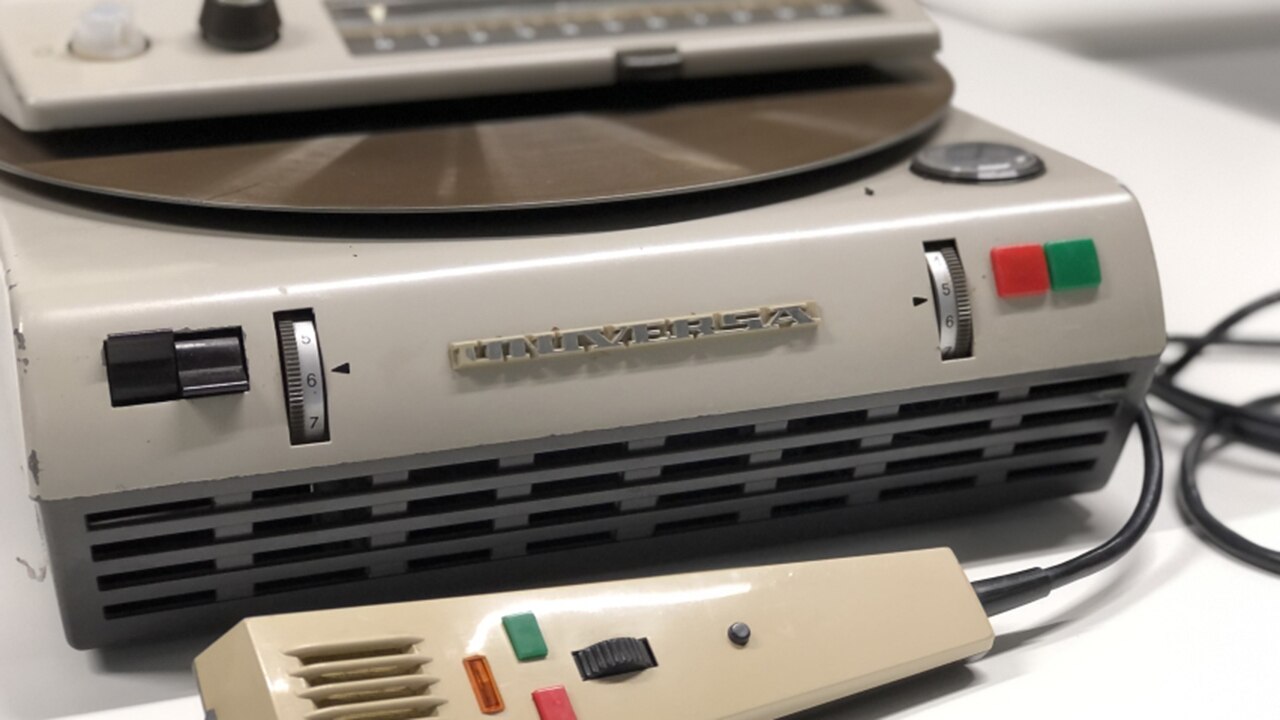
Magnetic dictation machine, 1962
textblock default title
As the applications of artificial intelligence have grown, the discussion about the possible directions and consequences of digital transformation processes has intensified significantly.
Some people view digital technologies as the basis for solving major problems in areas such as mobility, medicine or the environment. Others are more concerned with the dangers resulting from the monopolization of data or criminal misuse. What is new is not only the scope, but also the speed at which science is continuously developing new approaches for problem-solving strategies (technologies) and delivering these strategies for new techniques. The ramifications of this development are the subject of intense debate in society. Looking back on the past can help us to visualize the consequences of technological change and use this knowledge to gain a clearer and more detailed picture of the future.
Seen from this perspective, the first "object of the month" for 2024 stands on a par with cuneiform tablets, pencils, printing presses, typewriters, and high-performance computers, all of which are used to record, connect and disseminate knowledge.
The device shown above is thought to have been manufactured in 1962, making it around 60 years old. This magnetic dictation machine is capable of both recording and playback and is therefore intended for the boss. In contrast, there are also devices that are only capable of playback, which are intended to be used by the secretary. At 8.2 kg, the device is already lighter than its technological predecessor, the parlograph, while its technology makes life easier for the user.
A magnetic disk serves as the data carrier. Each side of the disk has room for ten minutes of recording. The grooves guide the recording head. The recording itself is produced entirely magnetically. The principle works in a similar way to a modern hard disk. It was introduced in dictation machines in 1948 and later superseded by tapes and compact cassettes.
The switch on the microphone is used to start playback and recording. The user presses the red button to record and the green button to play back the recording.
textblock default title
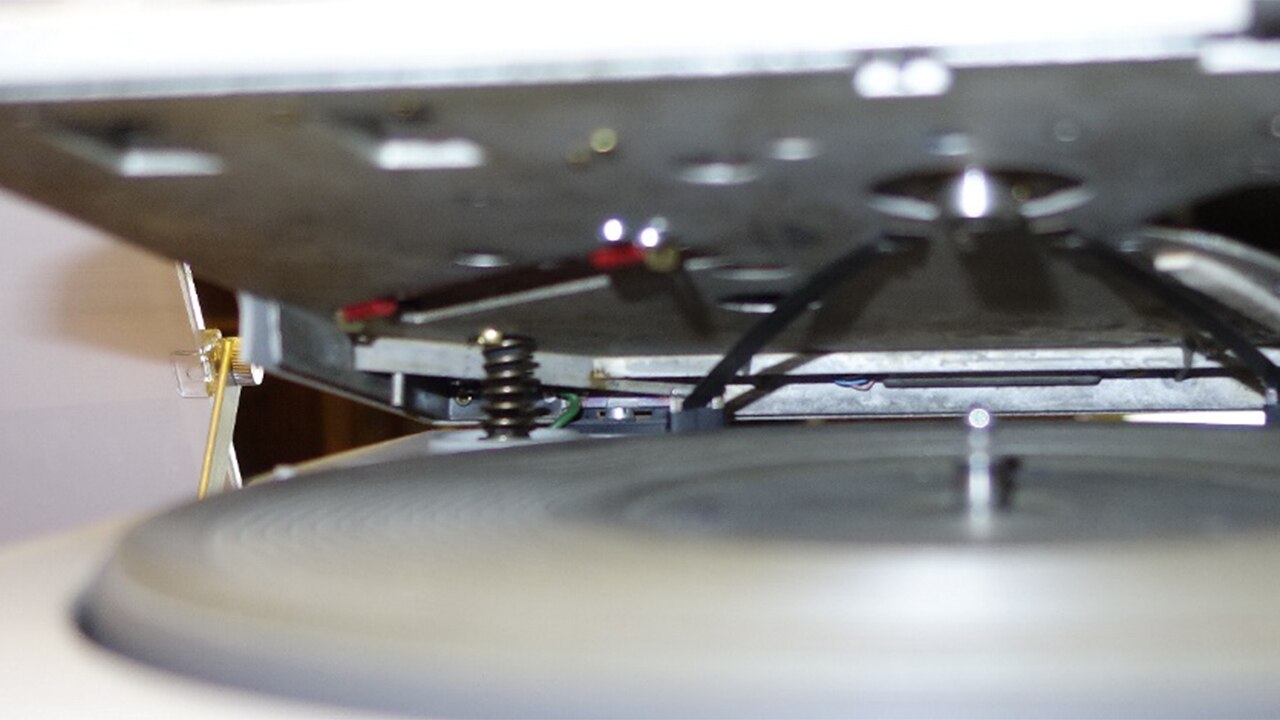
The recording can be played back through the loudspeaker, "discreetly" via the dynamic microphone or using separate headphones. A telephone adapter for recording telephone calls can also be connected.To quickly jump to particular sections of the recording, the position of the recording head can be moved using the right-hand button on the top part of the machine. The left-hand button switches the direction to rewind while also actuating a permanent magnet. The magnet touches the disk surface and erases the contents of both sides of the disk simultaneously due to the strong magnetic field it produces.The top part of the machine can be flipped up to remove the data carrier, i.e. the magnetic disk.