


Select your Market
-
{{ userContent.title }}

{{ userContent.lookingForMoreLabel }}


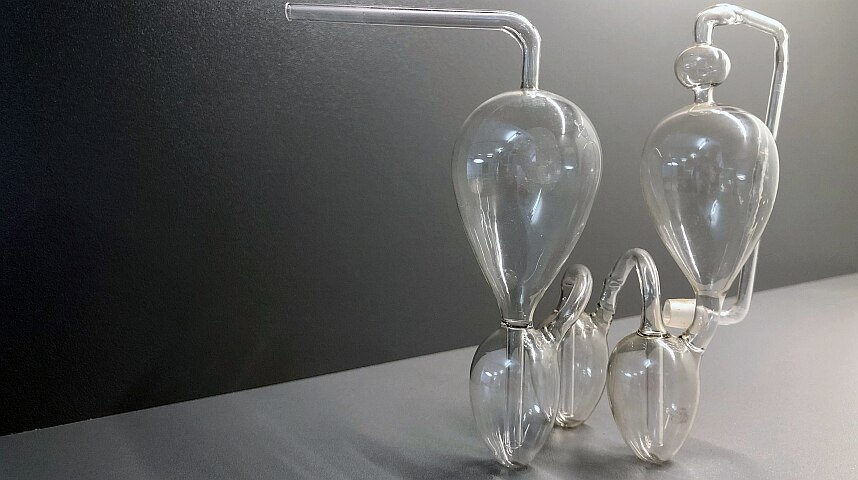
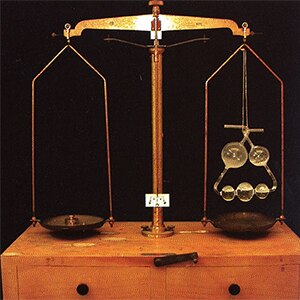
The five-bulb apparatus, no date
textblock default title
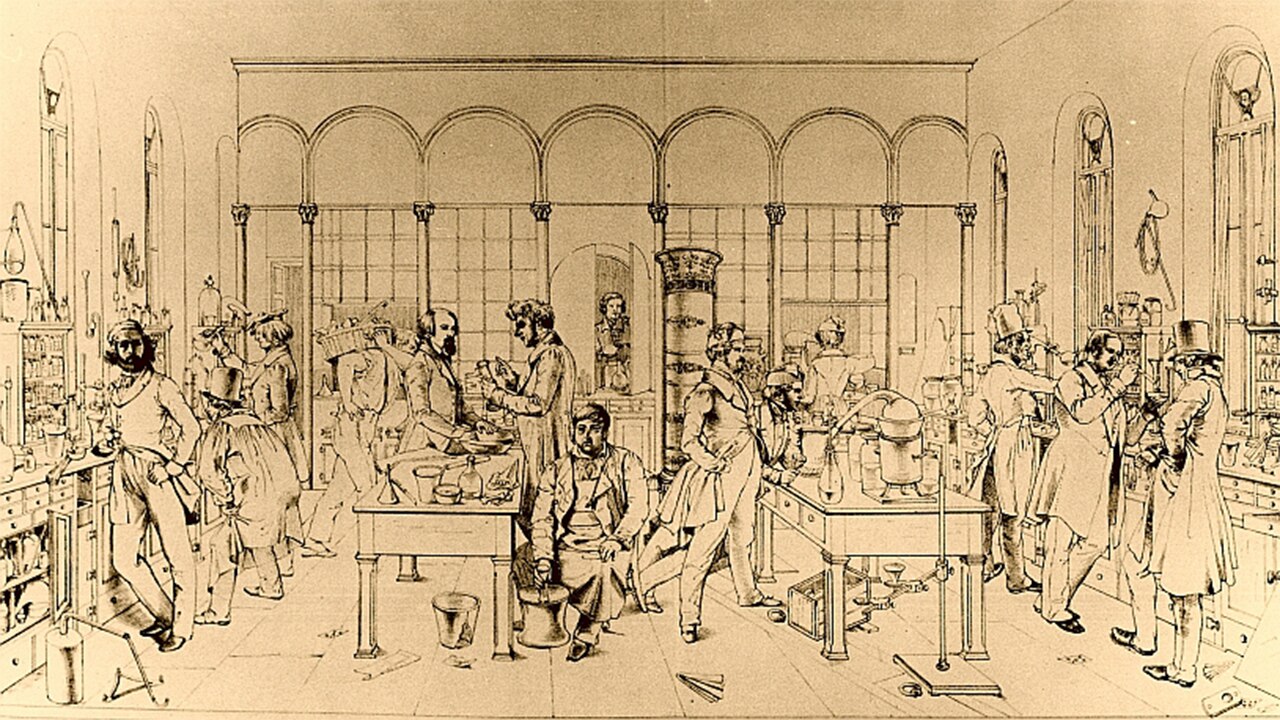
In 1831, Justus Liebig achieved a crucial advance in organic substance elemental analysis. He was only 28 at the time and professor of Chemistry and Pharmacy in Giessen.
The qualitative composition of organic substances was easy to determine by then. Yet the determination of the quantitative composition, the measurement of carbon, hydrogen, oxygen and nitrogen, is crucial for elucidation of structures. The basic idea of determining the composition of a substance from its gaseous combustion products had long been known – it dates back to Antoine Laurent Lavoisier – but a simple and reliable method for doing so was not.
With two seemingly simple procedural changes, Liebig transformed elemental analysis from a tedious procedure that could only be performed by highly skilled chemists into a standard method. This was an invaluable asset for the rapidly emerging scientific community of chemists and pharmacists – including in natural product chemistry, which was so important at the company.
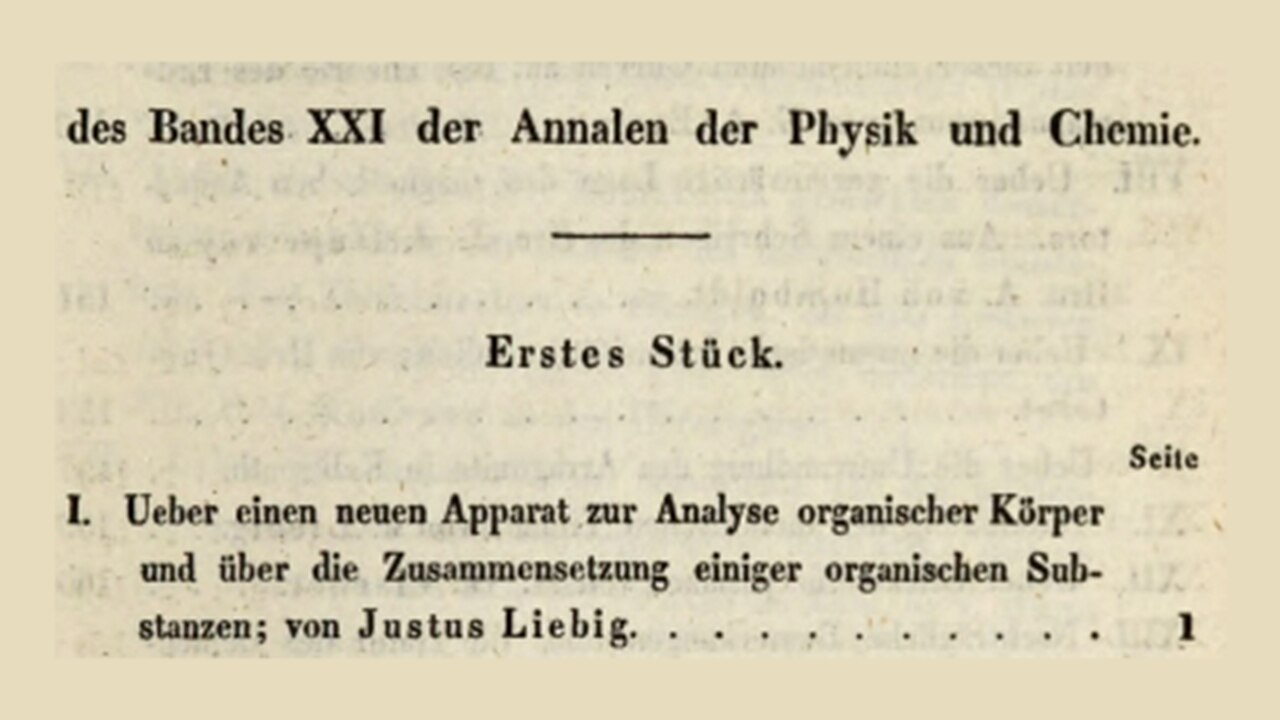
On the one hand, Liebig recognized the necessity of separating the nitrogen determination and, on the other, he invents the “five-bulb apparatus”. His “kaliapparat,” as he initially called it, allowed analyses to be carried out by means of precise weighing. Only then was it possible to obtain sufficient and reliable data in a reasonable time. In 1831, he reported the following:
textblock default title
“I will first describe the apparatus which I have used for the determination of carbon and which can be used for the analysis of a non-nitrogenous body; nothing is new about this apparatus except its simplicity and the perfect reliability that it affords. The substance is combusted to carbonic acid (carbon dioxide) and water, these products are separated, their weights are measured and the carbon is calculated from the carbonic acid, the hydrogen from the water. If the sum of the carbon and hydrogen is equal to the weight of the burned substance, then it contains no oxygen; if it is less, then the difference expresses the amount of the latter.”
textblock default title
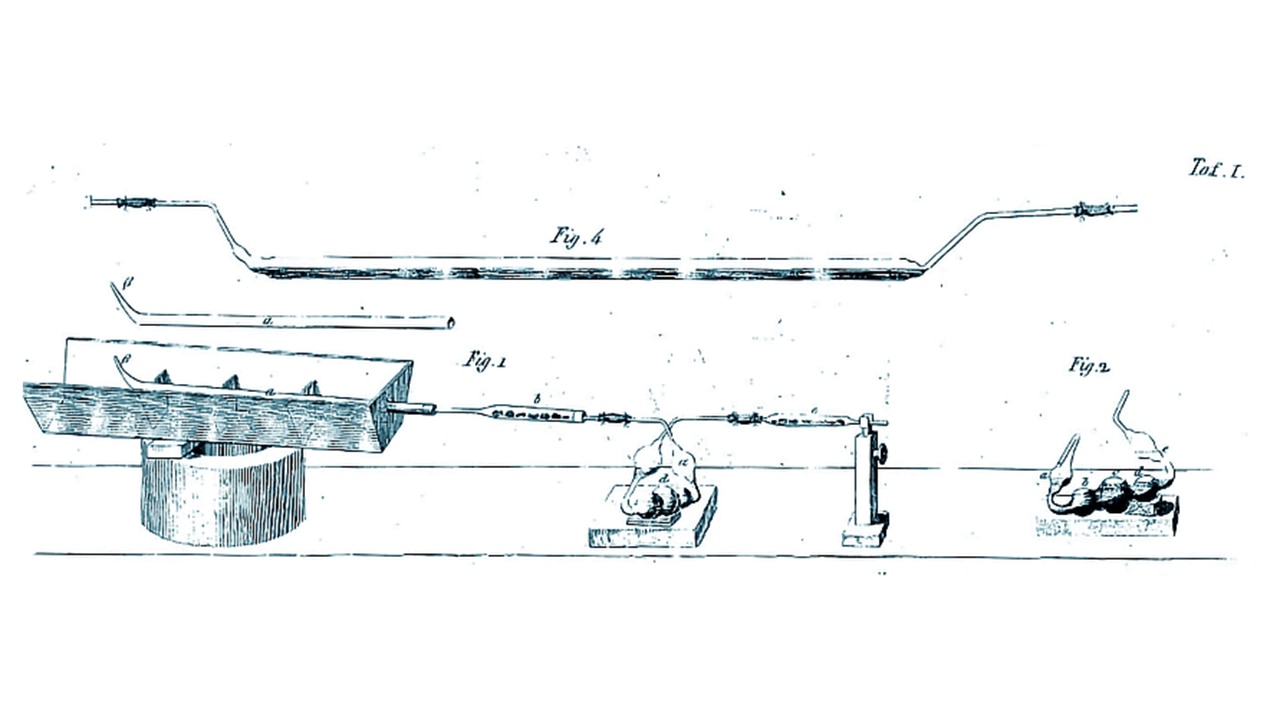
“Fig. 1 is the combustion tube, which is extended at one end to a point β standing on end; b is a tube with molten calcium chloride, d is an apparatus, with a concentrated solution of caustic potash to absorb the carbonic acid, e is a tube with molten caustic potash. At the beginning of the experiment, the potash is in the apparatus inwhich the carbonic acid is absorbed; as soon as the gas enters bulb A, the liquid in the opposite bulb rises to E, each individual gas bubble first enters bulb B, C and D, and then still has to overcome the resistance which the liquid column in bulb E offers to its escape.
As soon as combustion begins, the apparatus is placed in the position by placing a piece of wood underneath it, in such a way that as soon as a gas bubble emerges at E, it takes a certain portion of the liquid with it into the bulb, but this falls back down into the horizontal tube each time.
In the case of combustion of a non-nitrogenous body, as soon as all atmospheric air is displaced by the carbonic acid gas, the liquid rises to e and remains there unchanged for the entire duration of the experiment, absorbing all the gas most completely. As soon as the experiment is finished, the liquid rises into the bulb α by absorbing the carbonic acid contained in it by the potash, it would gradually rise into the calcium chloride tube and the combustion tube. But to prevent this, as soon as it has risen into the bulb A to a certain height, the tip β of the combustion tube is cut off, after which the liquid falls back down into the horizontal tube.
I do not need to add that the increase in weight of the potash and calcium chloride tube gives exactly the amount of carbonic acid and water formed by the combustion.”
textblock default title
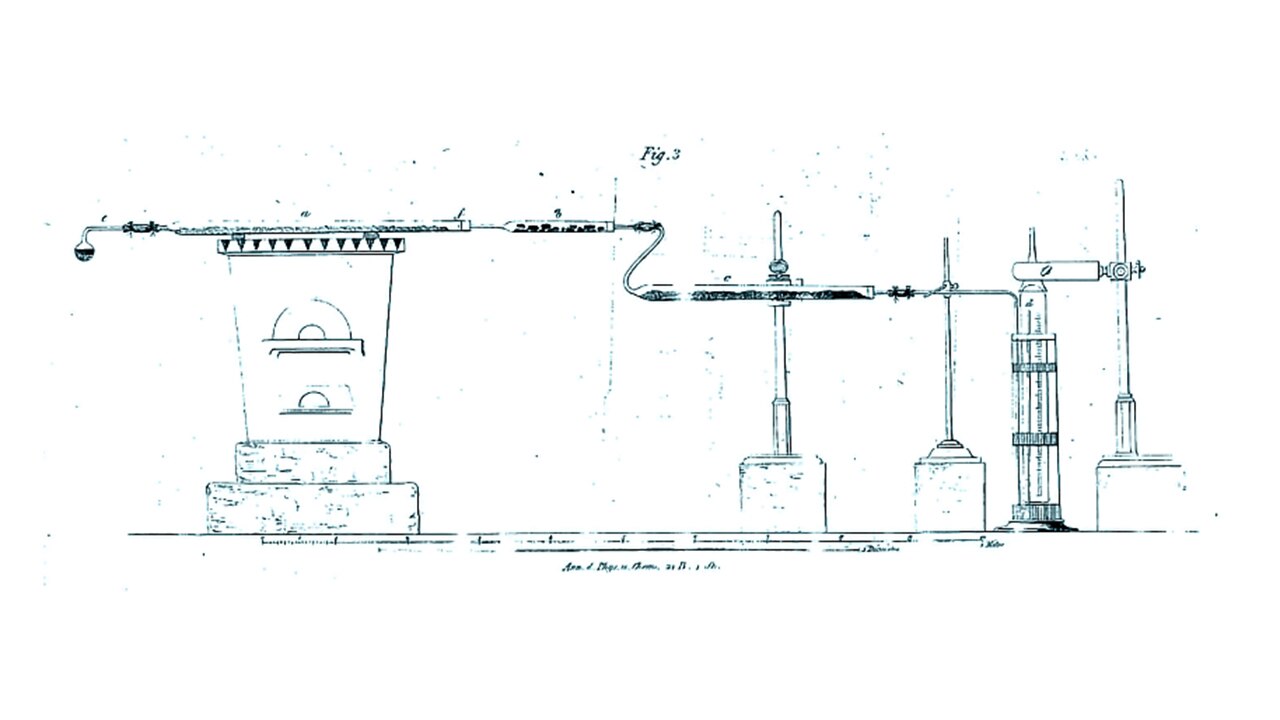
“With the aid of the apparatus Fig. 3, I believe I have arrived at determining the nitrogen with greater accuracy than is possible by the known methods. However, I am far from considering the method of nitrogen determination to be perfect. I only believe that it is the least bad of the bad ones”.
textblock default title
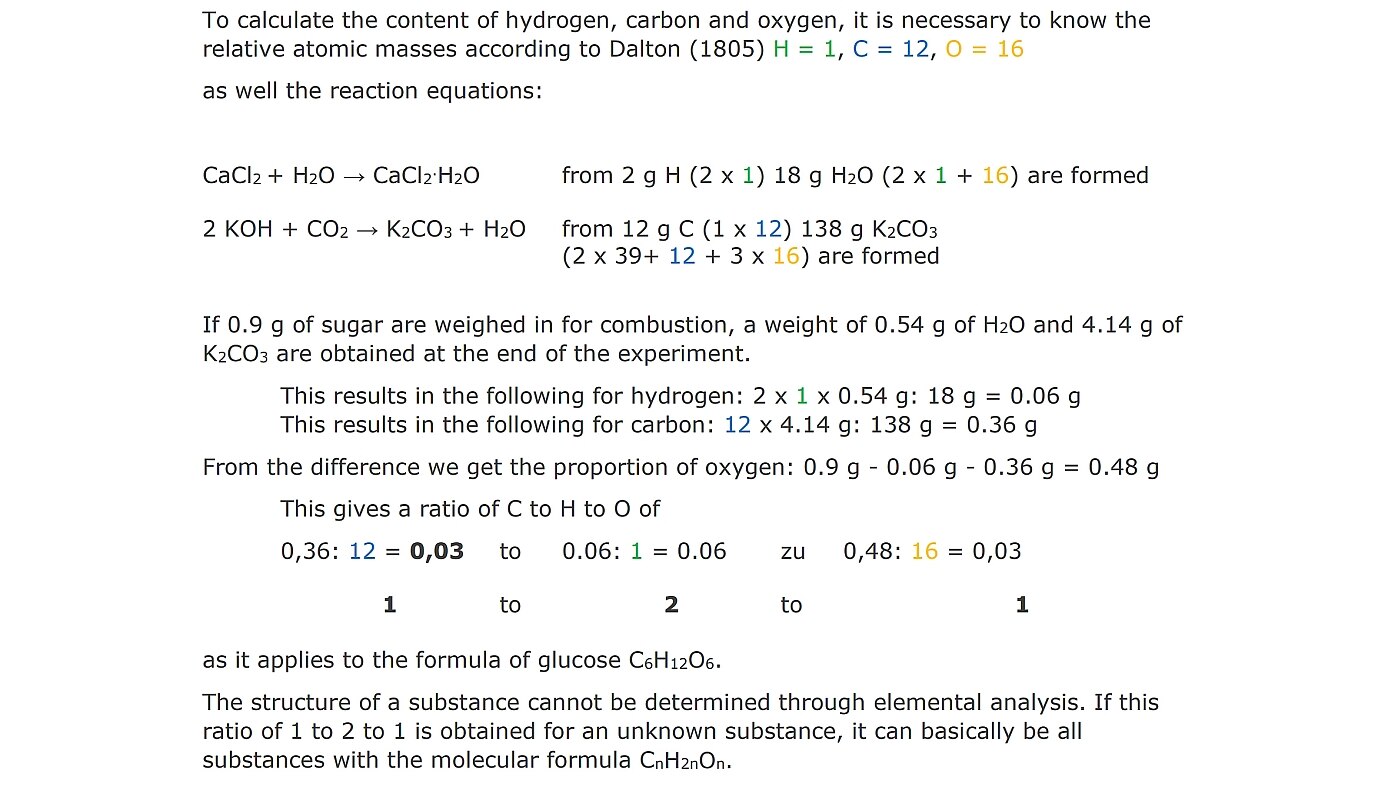
How was elemental analysis according to Liebig conducted? Carl Remigius Fresenius, one of Liebig's students, described the "analysis of compounds consisting of carbon and hydrogen alone, or of carbon, hydrogen and oxygen": The analysis can be well explained using the example of glucose, comprising the elements C, H and O.

textblock default title
The substance is placed into the combustion tube with the addition of copper oxide, which is located in a furnace specially designed for controlled combustion.
When heated, CuO releases oxygen, which oxidizes the sugar. This gives rise to water and carbon dioxide. H2O is absorbed in a subsequent tube by calcium chloride.
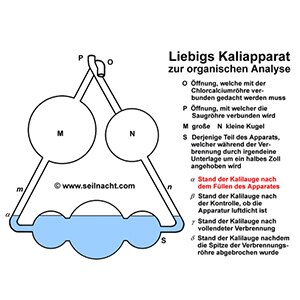
CO2 is absorbed in the downstream five-bulb apparatus by concentrated potassium hydroxide solution as potassium carbonate.
textblock default title
The shape of the device guarantees complete absorption of the CO2: It flows via bulb M into the horizontally arranged bulbs filled with KOH and is "swirled" each time through a large absorption area. The absorption is finished when no more bubbles bubble into the bulb N.
The tube and potassium apparatus are separated, both parts are weighed and these values are compared with the weighing of the apparatus before the experiment.
The apparatus is so compact and lightly constructed that the weighing can be done without working up the solution it contains
textblock default title
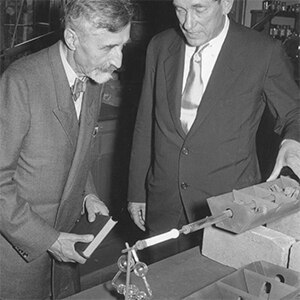
(Visit to the Liebig Museum in 1952 – from left Dr. Heinrich Freiherr von Liebig, Fritz Merck)
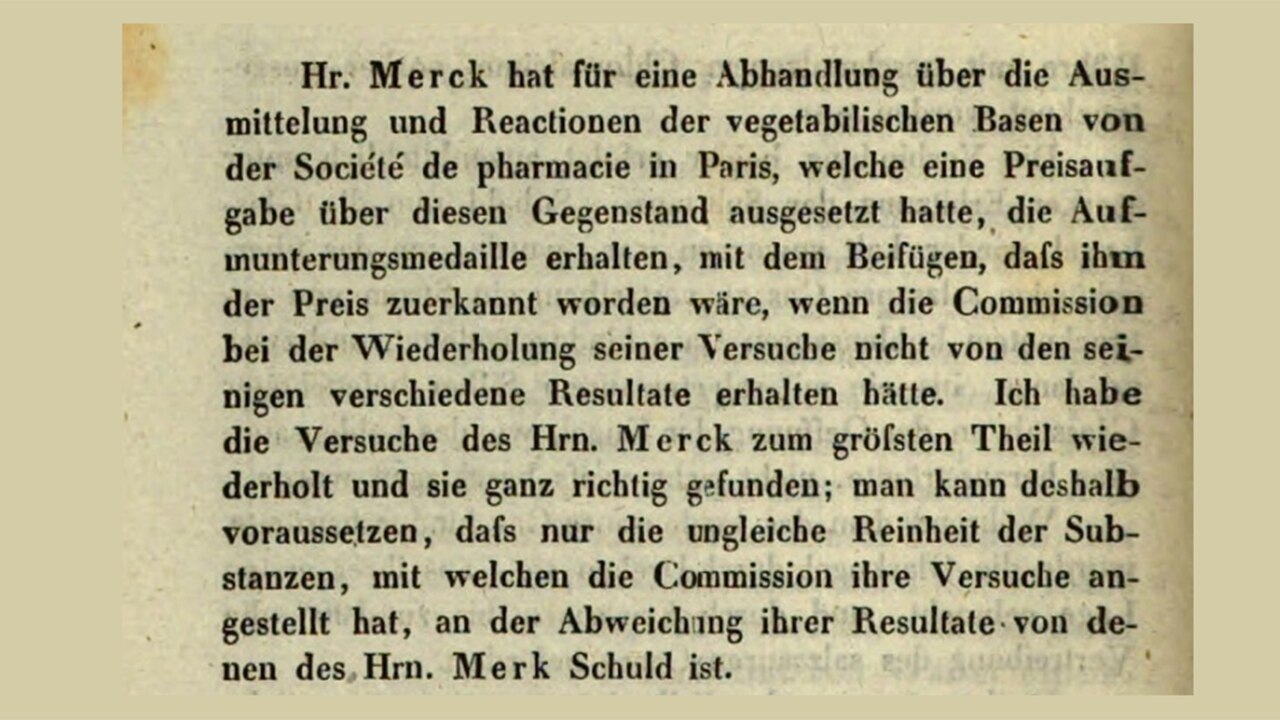
In 1830, Emanuel Merck had to experience what it meant to have no generally recognized standards. The "Société de Pharmacie" in Paris held a competition in the search for methods that can be used in forensic medicine to detect the presence of alkaloids with certainty. Although the company's work was praised, the examiners could not reproduce his results. It is Justus Liebig who got to the heart of the problem in his publication on the five-bulb apparatus:
textblock default title
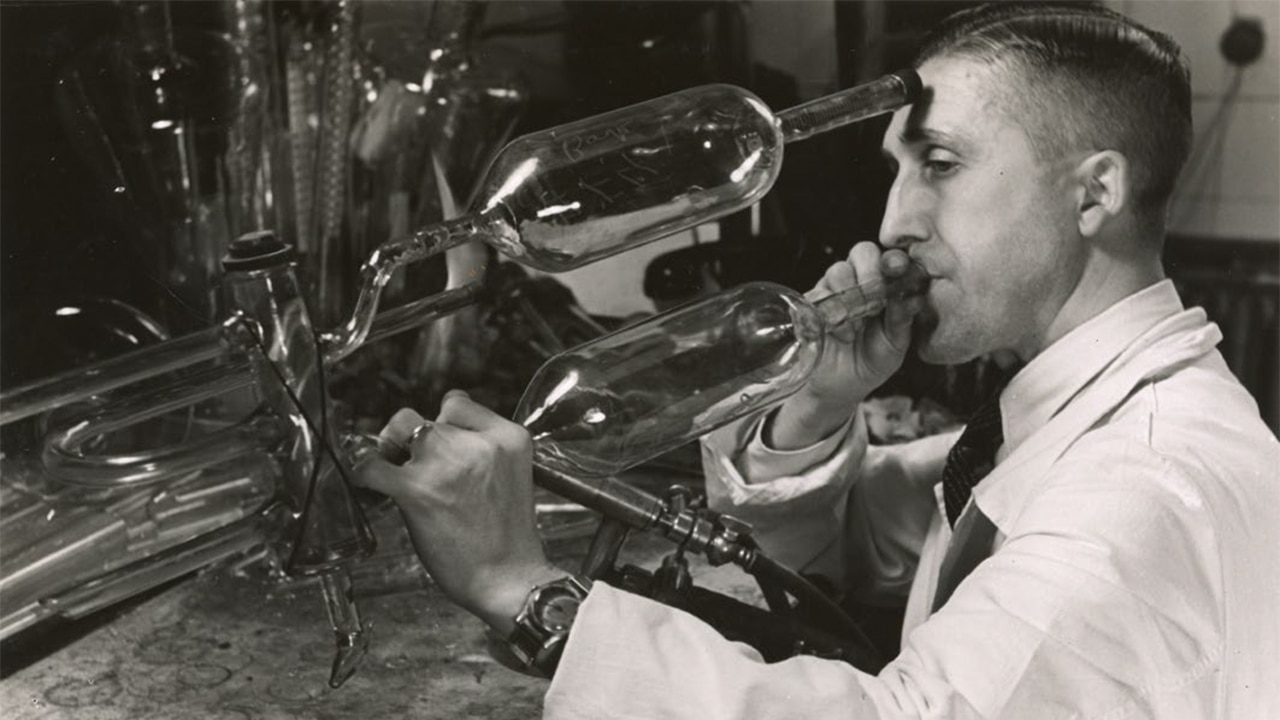
The basis for Liebig's invention was also a mature craft. It was true that the professor himself had also mastered the rudiments of glassblowing. However, professionals were needed for the precise implementation of his ideas.
textblock default title
Until 2001, glassblowers were among the many occupations at the company. By crafting specialized custom tools, they paved the way from laboratory to the commercial scale necessary for production.
In the 1950s, the seven glassblowers were located on the second floor of the “Science” building, thus putting them in the immediate vicinity of the research laboratories. The production areas made use of their expertise as well, followed later on by the company subsidiaries outside Germany. The glassblowers were always called upon when, on the route from the idea to the product, the items in the catalogue are insufficient to the task.
The pieces created primarily include “chillers, distillation equipment, specialized equipment for microanalysis and pharmacology, and glass containers for all sorts of chemicals, fermentation processes and bacteriological procedures. In crafting this equipment, not only the shape matters, but also the type of glass because the finished pieces must withstand specific temperature and pressure levels.