


Select your Market
-
{{ userContent.title }}

{{ userContent.lookingForMoreLabel }}


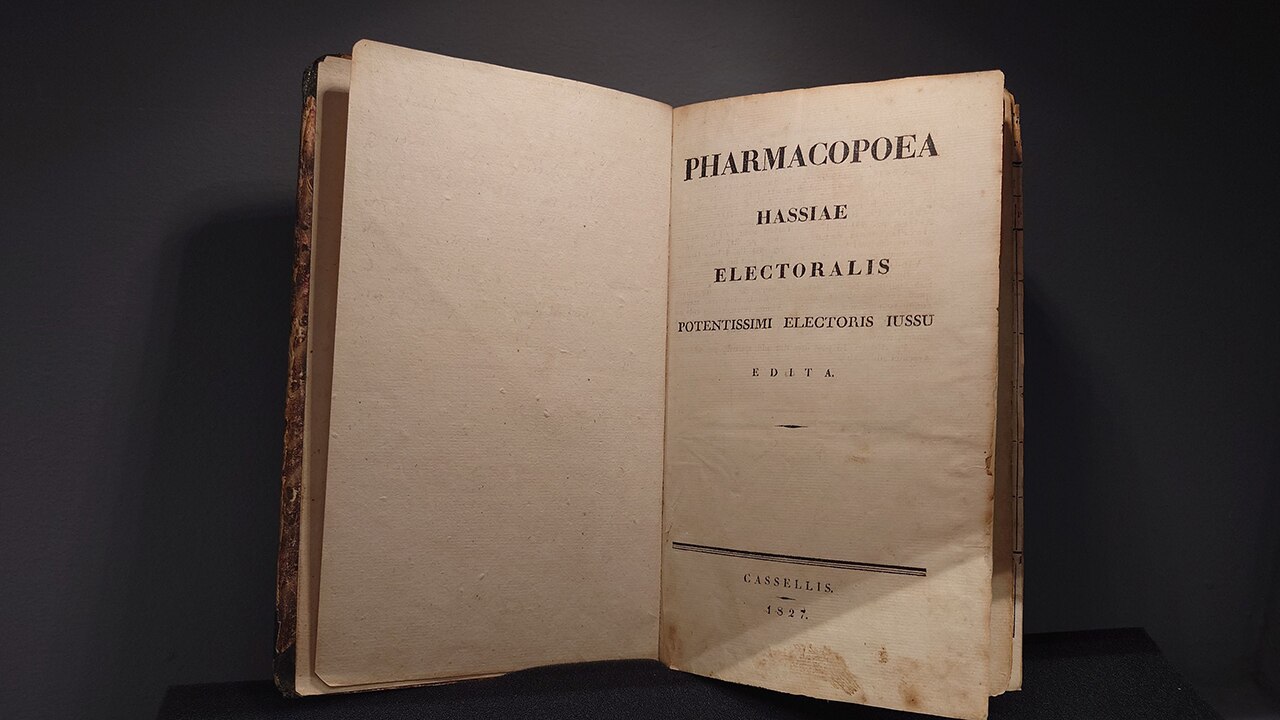
Pharmacopoea Hassiae, 1827
textblock default title
The reference library of Corporate History features thousands of books and periodicals, covering everything from valuable illustrated formulation and herbal books from the 15th century through to
contemporary expert literature. The collection of national and international historic pharmacopoeias is particularly noteworthy. A pharmacopoeia (Latin pharmacopoea, from Greek pharmakopoieĩn: “to prepare medicines”) is an official pharmacopoeia, i.e. a list of official medicines with instructions on their preparation, composition and use.
The most recent addition to the collection is the “Pharmacopoea Hassiae Electoralis Potentissimi Electoris Iussu Edita”, published in 1827 – a particularly important year for the history of the company. It was acquired on the antiquarian book market in collaboration with the Global Scientific Library. The book, written in Latin and organized alphabetically, whose title can be translated as “The Electoral Pharmacopoeia of Hesse, published on behalf of the most powerful elector”, is divided into three parts.
textblock default title
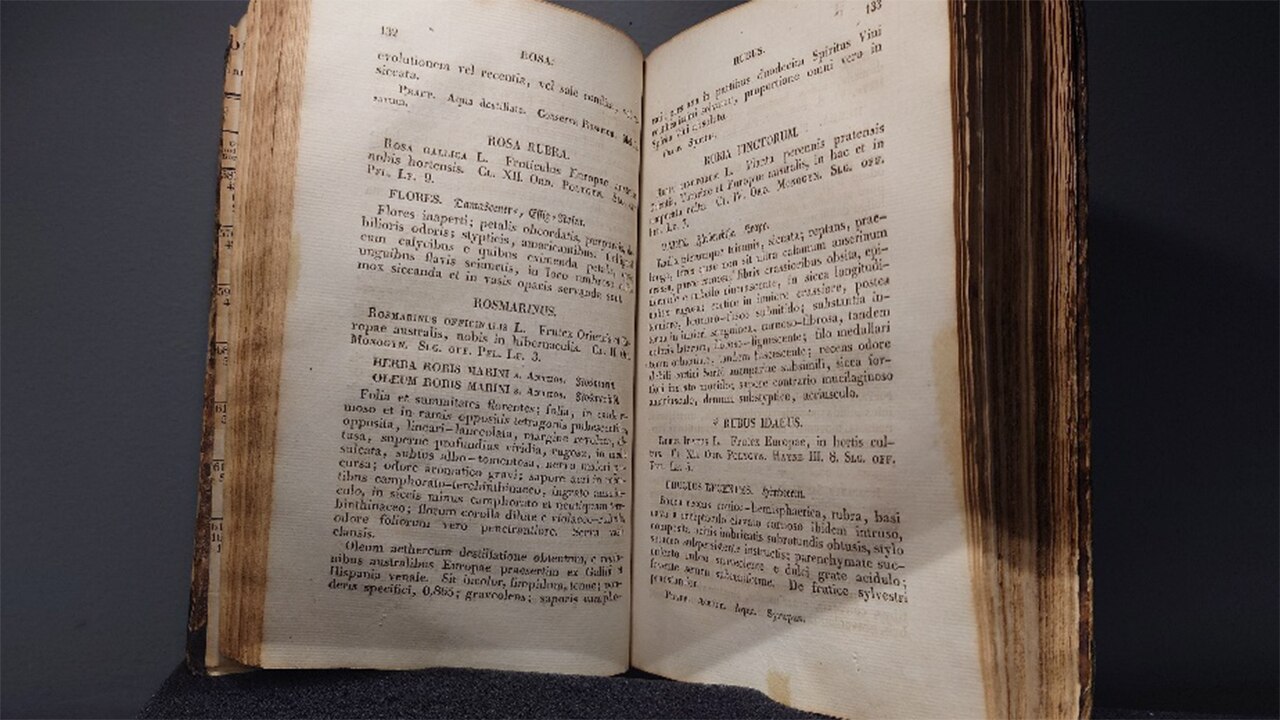
The "Pharmacopoea Hassiae", published in 1827, was written in Latin.
The first part ("Materia Pharmaceutica") deals with traditional "Simplicia", i.e. simple products that can be used both pharmaceutically and otherwise – for example in the kitchen. These include aniseed, dates, eggs, vinegar, pomegranate, ginger, chamomile, cocoa, lavender, marjoram, milk, nutmeg, olive oil, parsley, pepper, rosemary, vanilla, wine, cinnamon, lemons and sugar.
The second part ("Formulae") deals with "Composita", i.e. the preparation and sale of "compound" medicines prepared by pharmacists according to recipes. These include, for example, "Sulfuric quinine", "Analgesic iron liqueur", "Pure Glauber's salt", "Purified licorice juice", "Compound lemon balm spirit", "Peppermint pellets", "Sweetened mercury", "Distilled wormwood oil" or "Juniper puree".
The third part ("Reagentiae") explains reagents and their properties, including "gall apple tincture”, "Hydrochloric acid saline liquid", "Pure Pottasch caustic solution", "Ammonium chloride", "Nitric acid silver oxide liquid" or "Ultra-pure soda liquid".
textblock default title
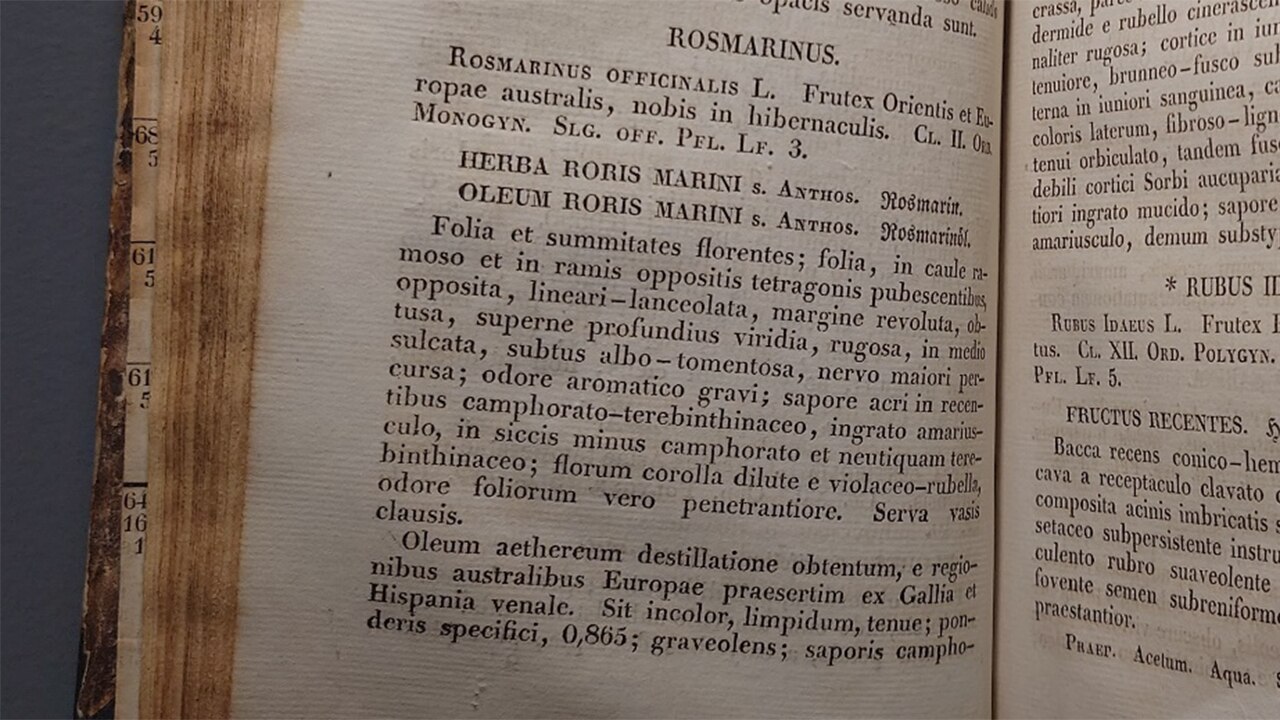
Text excerpt on the pharmaceutical use of rosemary (Rosmarinus officinalis)
Although the name "Pharmacopoea Hassiae" refers to Hesse, it is somewhat misleading, as the current federal state of Hesse was only formed after World War II. Its predecessors included the Grand Duchy of Hesse (capital Darmstadt) and the Electorate of Hesse (capital Kassel). In this respect, the pharmacist Emanuel Merck did not have to follow the “Pharmacopoea Hassiae” published in Kassel, but the “Pharmacopoea Borussica” published in Darmstadt. Nevertheless, it can be assumed that the company, who was scientifically trained, also studied this newly published pharmacopoeia with interest.
textblock default title
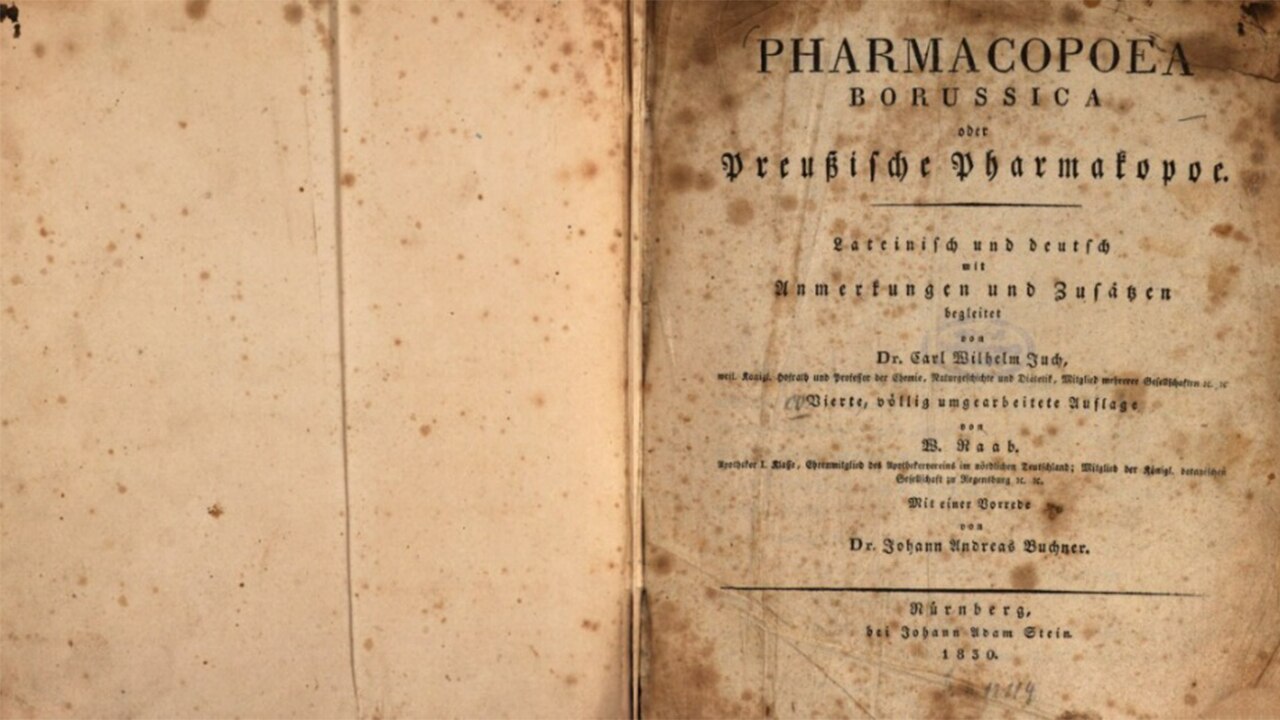
The "Pharmacopoea Hassiae", published in 1830, was written in Latin and German.
In addition, the "Pharmacopoea Hassiae" gives a good impression of pharmacy at the time, especially as it was published in the year in which Emanuel Merck began producing medicines "on a large scale" beyond the needs of his own pharmacy. This is also possible because the generally binding requirement in the Prussian Pharmacopoeia of 1799 for pharmacists to prepare their own pharmaceutical products was gradually weakened.
The fourth "Pharmacopoea Borussica", published in 1830 and also valid in Darmstadt, therefore met with many protests from pharmacists who saw themselves reduced to the role of "mere dispensaries". Emanuel Merck, however, knew how to take advantage of this development and initiated the transition from a pharmacy craft to a research-based industrial enterprise.