


Select your Market
-
{{ userContent.title }}

{{ userContent.lookingForMoreLabel }}


Yin and Yang
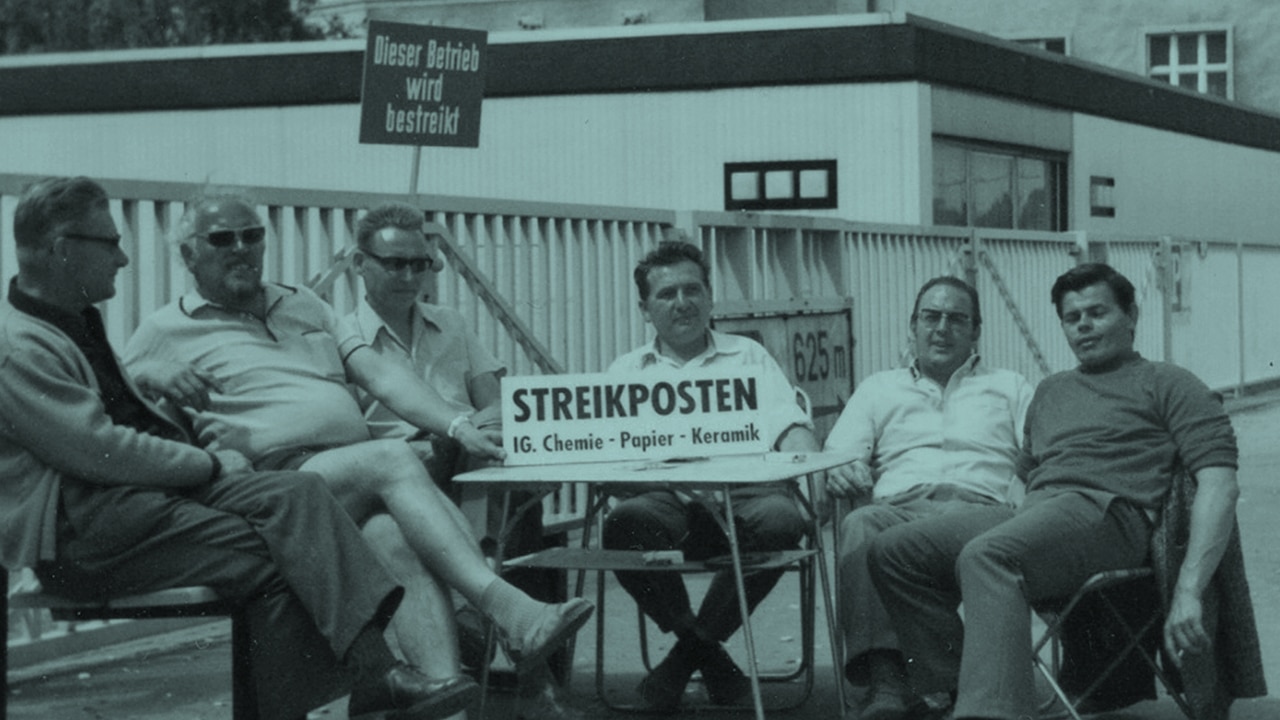
»This company is on strike«
Poster, 1971
The terms Yin and Yang, which originate from Chinese philosophy, stand for diametrically opposed, interrelated forces that do not fight, but rather complement each other. Sometimes one side dominates, sometimes the other does, however ideally, the relationship is a balanced one. The same applies to relations between employers and employees.
Strikes are the exception at the company – a phenomenon that is typical for the entire chemical industry and is due not least to the type of production. Chemical processes are more complex and they are more difficult to interrupt than many other manufacturing operations. In addition, the personal commitment and responsibility of the owners strengthens the feeling of belonging within family owned companies, making it difficult for trade unions to gain a foothold there. The first major strikes at the company do not take place until after World War I. The strike in summer 1971 is a watershed. It is conducted with a previously unimaginable fury – and creates deep rifts extending well beyond that year. Basically, this industrial action is also about money, with the unions demanding a wage increase of at least 11%. In addition, there are fundamental power questions between the trade union and the employers’ association. The conflict escalates to a greater extent at the company than at almost any other company in Hesse. This is due not least to the fact that company executives play an influential role in the employers’ association and that the employees’ side includes far-left leaning union representatives.
The strike begins on June 15, 1971 with a protest rally. One day later, around 4,000 workers begin the industrial action. The dispute is not only between employer and employees – friction also exists within the workforce. Those who want to work often find themselves prevented from accessing their workplaces as »strikebreakers« and can initially only enter the factory premises under police protection through a narrow lane formed by the strikers. In the heated atmosphere, physical fights ensue and the police is called; the company doctor has to treat bruises, abrasions and stab wounds.
After the conclusion of a nation-wide arbitration with a wage increase of 7.8%, the industrial action ends on July 5, 1971. Nevertheless, the workforce still regards the strike as a turning point for years to come. There is the period »before the strike« and the period »after the strike« at the company, underscoring the tremendous impact of this conflict.
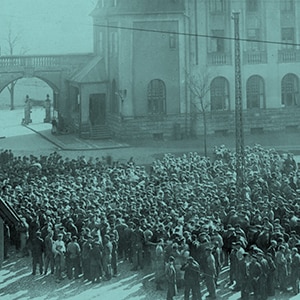
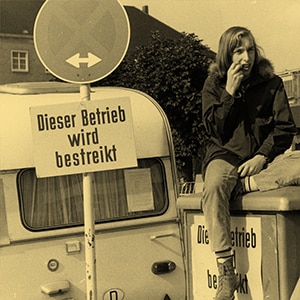
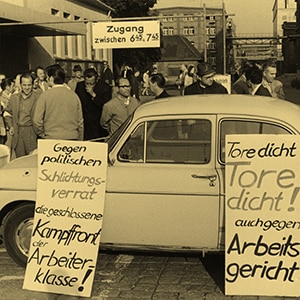
The first major strikes at the company take place after World War I. A turning point was the strike in the summer of 1971, which was carried out with unexpected severity and left deep rifts behind. In addition to wage demands, the dispute is also about fundamental power questions between the trade union and the employers’ association.
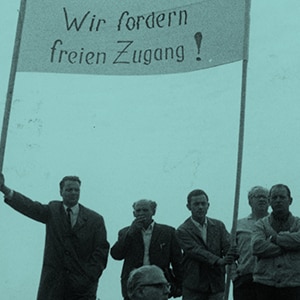
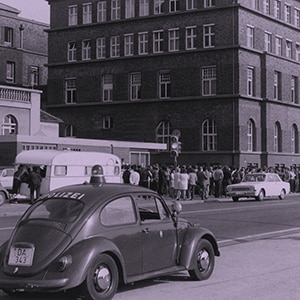
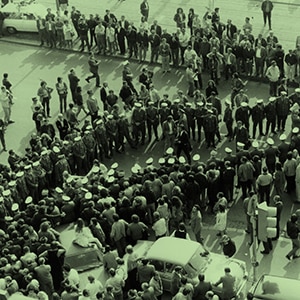
The dispute also takes place within the workforce, between the strikers and the strikebreakers. The latter demand free access to their workplaces, but are sometimes prevented by the strikers from entering the site. Initially, the police are repeatedly called to intervene.
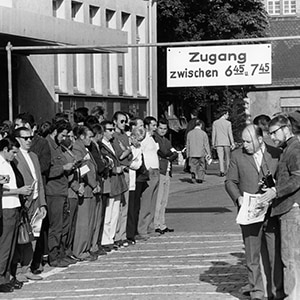
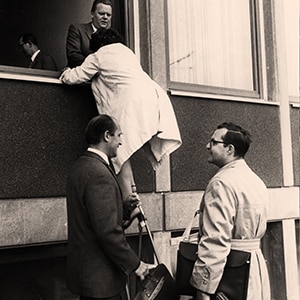
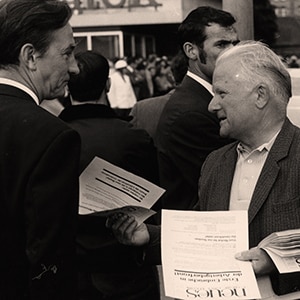
Following a court order, those willing to work are allowed to enter the site a long path marked with white lines, which the strikers call the »lane of shame«. Some try to enter their work place through windows. Distributing leaflets is imperative during industrial actions.