
Select your Market
In cooperation with the American Chemical Society (ACS), scientists are honored for their outstanding work in synthetic organic chemistry.
This award is an early recognition for the best chemists in the world, testified by the fact that several past laureates went on to receive a Nobel prize. Examples include 1983 awardee K. Barry Sharpless (Scripps Research Institute, La Jolla; Nobel prize in 2001), who received the Nobel prize "for his work on chirally catalysed oxidation reactions" and 2010 awardee Ei-ichi Negishi (Purdue University, West Lafayette; Nobel prize later in the same year), who was honored for his achievements in organic synthesis.
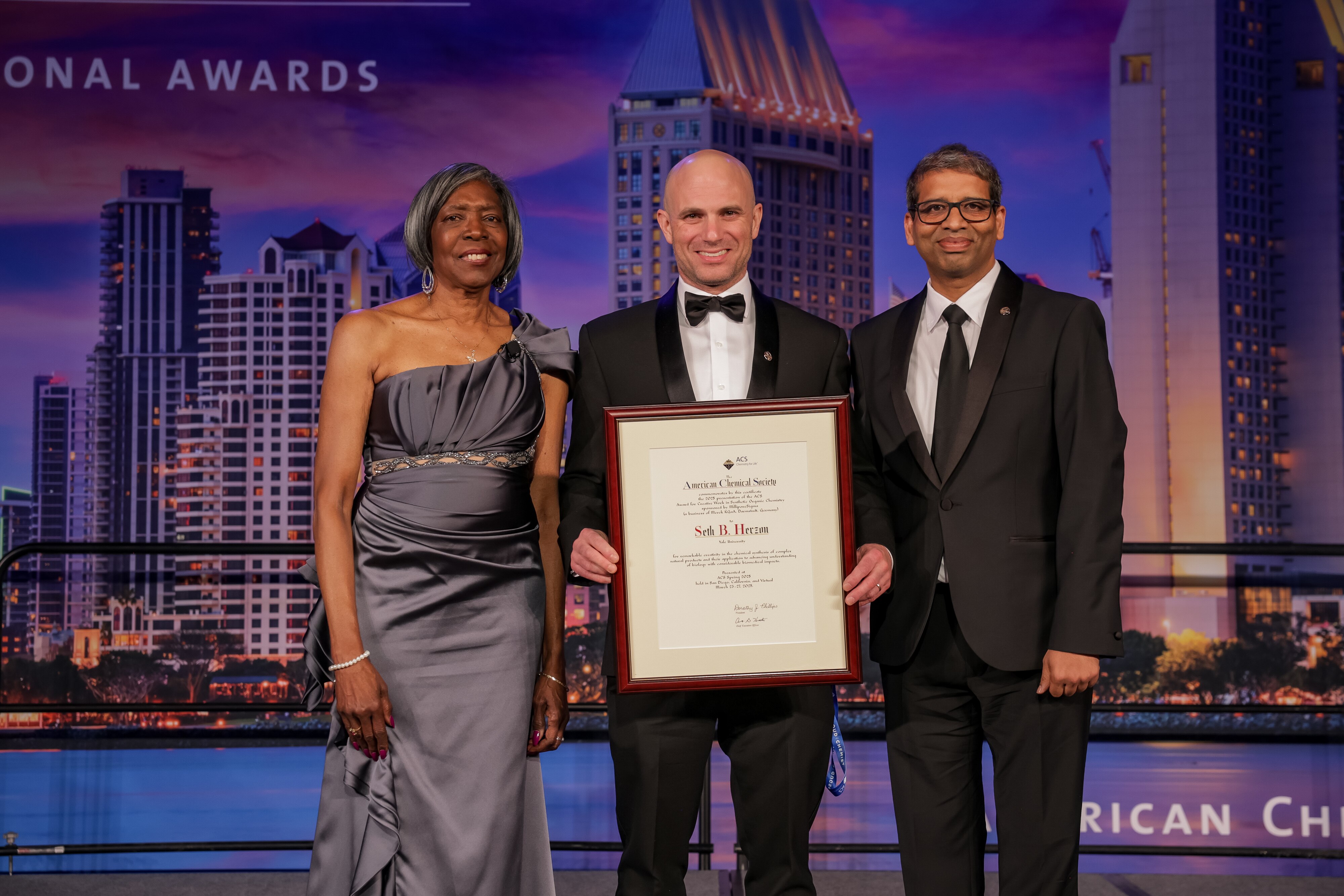
In 2025, Merck KGaA, Darmstadt, Germany was again pleased to sponsor the ACS Award, given this year to Seth B. Herzon from Yale University. He was awarded "For remarkable creativity in the chemical synthesis of complex natural products and their application to advancing understanding of biology with considerable biomedical impacts".
Herzon on a memorable project: “Our recent work to design novel therapeutics for the treatment of drug-resistant brain cancers is among my favorite projects. We have the opportunity to improve the longevity and quality of life of individuals living with what is presently an incurable and terminal disease.”
What Herzon’s colleagues say: “Seth is an extraordinarily creative synthetic organic chemist whose work defines the bounds of what can be achieved in complex chemical synthesis. He has developed chemical syntheses of some of the most complex natural products known, each characterized by remarkable creative invention and novel problem-solving strategies.”—Andrew G. Myers, Harvard University.
Year | Name | University | |
|---|---|---|---|
| 2025 | Seth B. Herzon | Yale University | For remarkable creativity in the chemical synthesis of complex natural products and their application to advancing understanding of biology with considerable biomedical impacts |
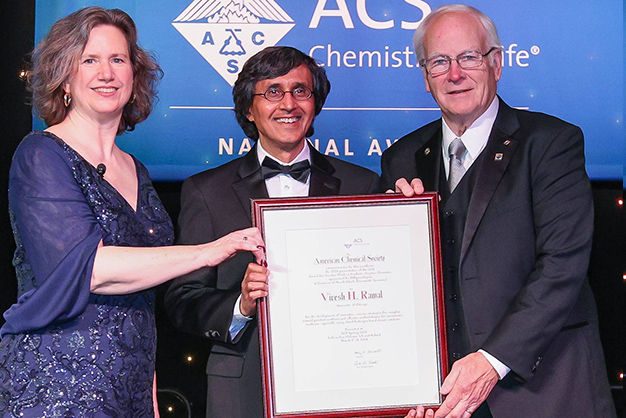
| 2024 | Viresh H. Rawal | University of Chicago | For the development of innovative, concise strategies for complex natural product synthesis and useful methodologies for asymmetric synthesis, especially using chiral hydrogen-bond donor catalysts |
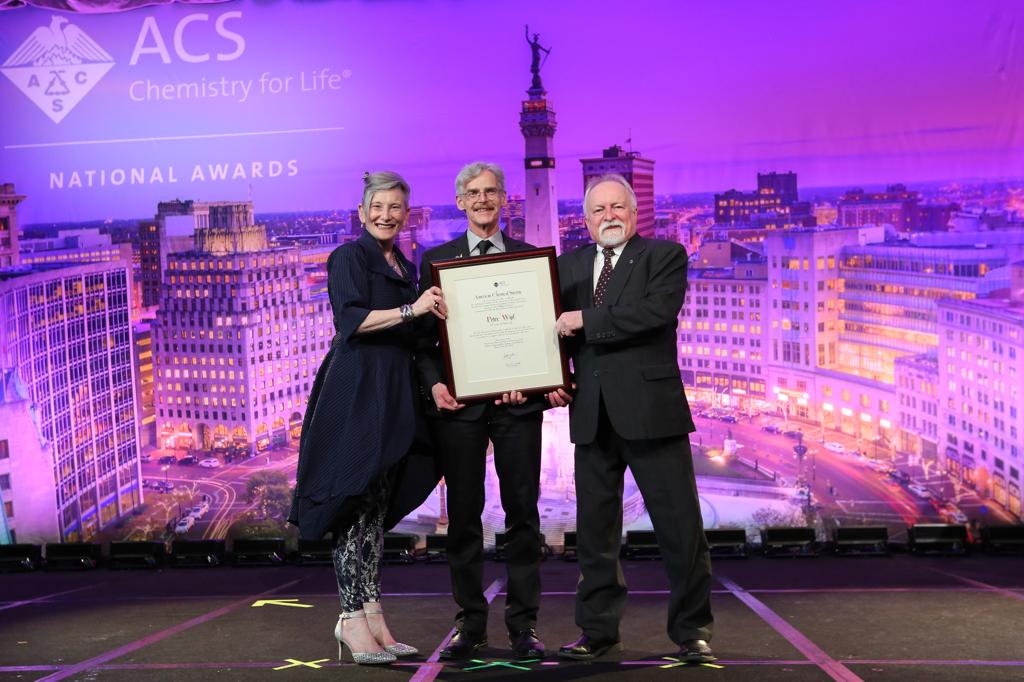
2023 | Peter Wipf | University of Pittsburgh | Discovery of innovative methods in heterocyclic and strain-release chemistry and the development of novel strategies to synthesize complex natural and unnatural molecules |
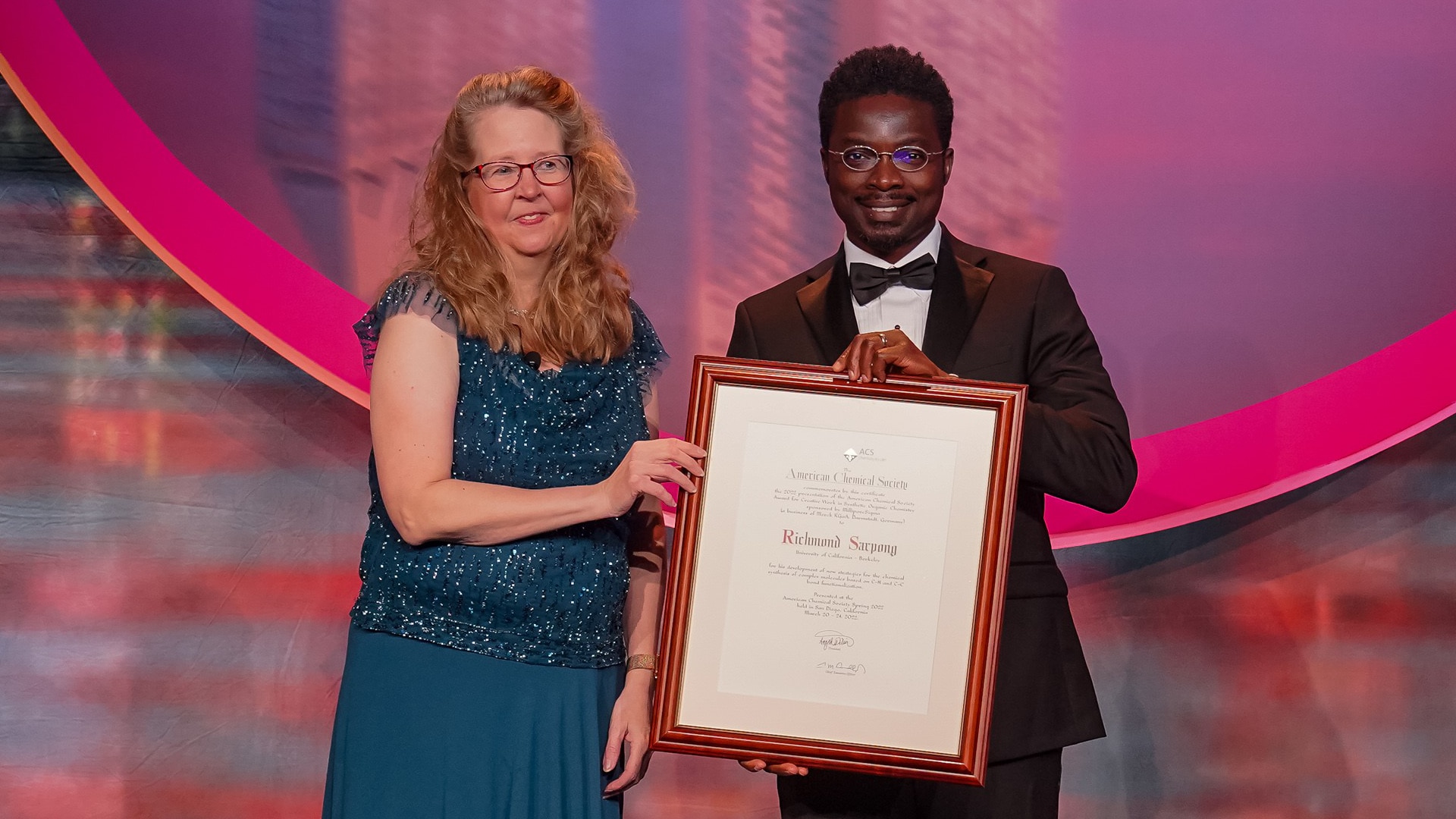
| 2022 | Richmond Sarpong | University of California, Berkeley | For the development of new strategies for the chemical synthesis of complex molecules based on C-H and C-C bond functionalization |
| 2021 | Jonathan A Ellman | Yale University | Inventing the landmark tert-butanesulfinamide approach to stereoselective synthesis, pioneering C-H bond functionalization reactions, and for defining the field of combinatorial small molecule synthesis |
| 2020 | Michael Krische | University of Texas at Austin | Developed a broad class of “C-C bond forming transfer hydrogenations”, notably, the reaction enables direct alcohol CH-functionaliztion, avoiding the often-necessary alcohol-to-aldehyde redox step. |
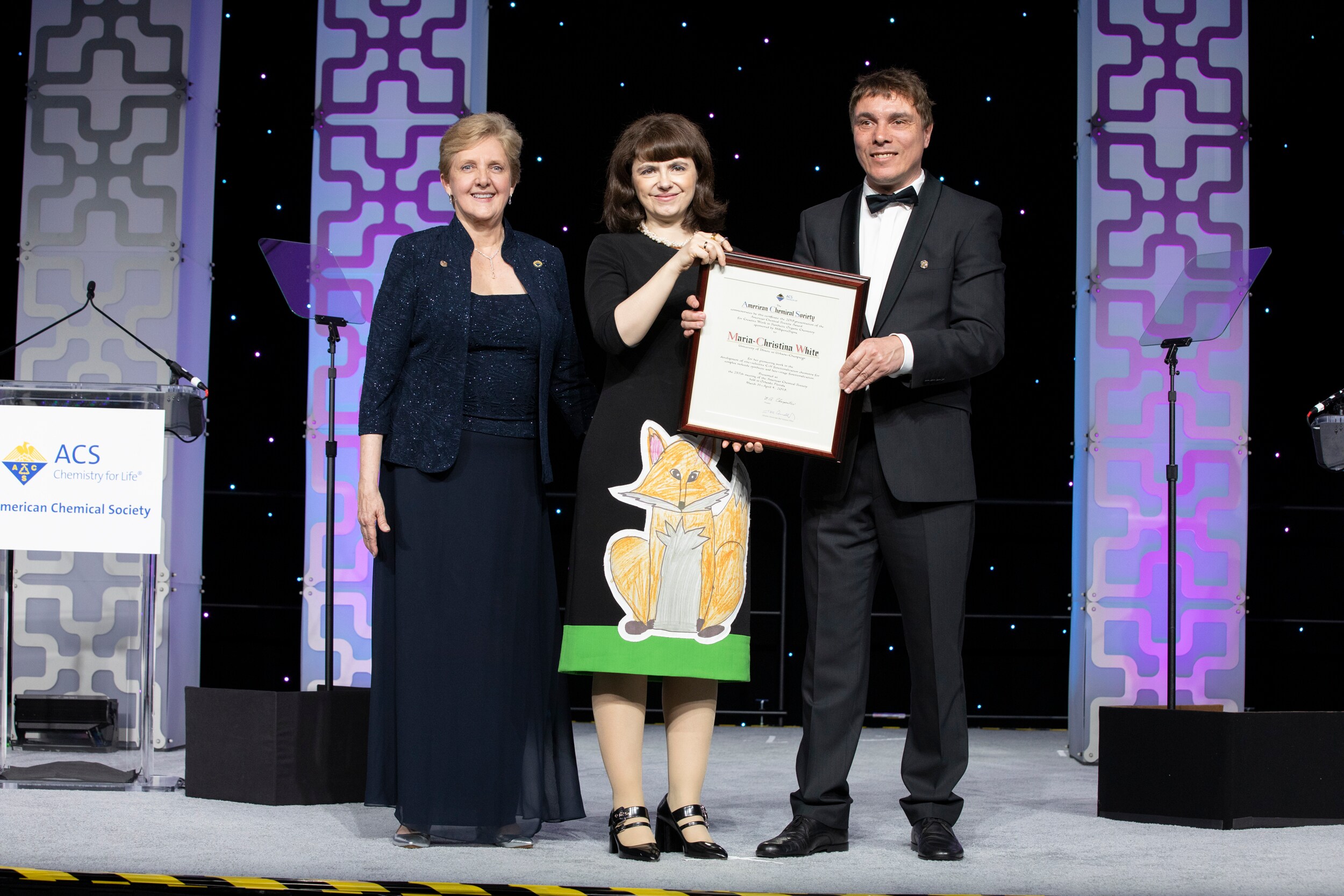
| 2019 | M. Christina White | University of Illinois, Urbana-Champaign | Pioneering work in the development of site-selective C–H functionalization chemistry for complex molecule synthesis and late-stage functionalization. |
2018 | Brian M. Stoltz | California Institute of Technology, Pasadena | Development of efficient methods, particularly cascade reactions, that allow for the efficient synthesis of complex organic molecules. |
2017 | Matthew S. Sigman | University of Utah, Salt Lake City | Innovative contributions to the Wacker oxidation and Heck reaction. |
2016 | Scott J. Miller | Yale University, New Haven | Discovery of minimal peptidic catalysts for important enantioselective and site-selective reactions. |
2015 | F. Dean Toste | University of California, Berkeley | Development and mechanistic understanding of novel catalytic concepts in organic chemistry |
2014 | Amir H. Hoveyda | Boston College, Boston | Creating “molecular masterpieces” in the areas of catalyst design through aesthetically pleasing transformations and development as well as total synthesis of complex natural products. |
2013 | Erick M. Carreira | Eidgenössische Technische Hochschule (ETH), Zürich | Creative development of new methods, total synthesis of natural products, and use of synthesis to probe biology |
2012 | Gregory C. Fu | California Institute of Technology, Pasadena | Contributions to metal-catalyzed cross-coupling and Heck methodology and enantioselective catalysis. |
2011 | David W. C. MacMillan | Princeton University, Princeton | Devising the novel strategy of using simple organic molecules, such as chiral amines, as asymmetric catalysts for highly enantioselective synthesis. |
2010 | Ei-ichi Negishi | Purdue University, West Lafayette | Nobel prize in 2010 "for palladium-catalyzed cross couplings in organic synthesis." |
2009 | Hisashi Yamamoto | University of Chicago, Chicago | Development of designer catalysts and reagents for organic synthesis. |
2019 M. Christina White, University of Illinois at Urbana-Champaign
2018 Brian M. Stoltz, California Institute of Technology, Pasadena
2017 Matthew S. Sigman, University of Utah, Salt Lake City
2016 Scott J. Miller, Yale University, New Haven
2015 F. Dean Toste, University of California, Berkeley
2014 Amir H. Hoveyda, Boston College, Boston
2013 Erick M. Carreira, Eidgenössische Technische Hochschule (ETH), Zürich
2012 Gregory C. Fu, California Institute of Technology, Pasadena
2011 David W. C. MacMillan, Princeton University, Princeton
2010 Ei-ichi Negishi (Nobel Prize in 2010), Purdue University, West Lafayette
2009 Hisashi Yamamoto, University of Chicago, Chicago
2008 Masakatsu Shibasaki, University of Tokyo, Tokyo
2007 Steven V. Ley, University of Cambridge, Cambridge
2006 Stephen L. Buchwald, Massachusetts Institute of Technology (MIT), Cambridge
2005 Chi-Huey Wong, Scripps Research Institute, La Jolla
2004 Tohru Fukuyama, University of Tokyo, Tokyo
2003 Scott E. Denmark, University of Illinois at Urbana-Champaign, Urbana and Champaign
2002 Andrew G. Myers, Harvard University, Cambridge
2001 Eric N. Jacobsen, Harvard University, Cambridge
2000 Dennis P. Curran, University of Pittsburgh, Pittsburgh
1999 Dale L. Boger, Scripps Research Institute, La Jolla
1998 Paul A. Wender, Stanford University, Stanford
1997 Amos B. Smith, III, University of Pennsylvania, Philadelphia
1996 Teruaki Mukaiyama, Scripps Research Institute, La Jolla
1995 Larry E. Overman, University of California, Irvine
1994 Stuart L. Schreiber, Harvard University, Cambridge
1993 K. C. Nicolaou, Rice University, Houston
1992 Dieter Seebach, Eidgenössische Technische Hochschule (ETH), Zürich
1991 Paul A. Grieco, Montana State University
1990 Clayton H. Heathcock, University of California, Berkeley
1989 Sir Derek H. R. Barton, Texas A&M University, College Station
1988 Robert E. Ireland, Scripps Research Institute, La Jolla
1987 Harry Wasserman, Yale University, New Haven
1986 Samuel J. Danishefsky, Columbia University, New York City
1985 Albert I. Meyers, Colorado State University, Fort Collins
1984 Leo A. Paquette, Ohio State University, Columbus
1983 K. Barry Sharpless (Nobel Prize in 2001), Scripps Research Institute, La Jolla
1982 David A. Evans, Harvard University, Cambridge
1981 Barry M. Trost, Stanford University, Stanford
1980 Yoshito Kishi, Harvard University, Cambridge
1979 George A. Ola, University of Southern California, Los Angeles
1978 Satoru Masamune, Massachusetts Institute of Technology (MIT), Cambridge
1976 Franz Sondheimer (Nobel Prize in 1965), University College London, London
1975 Herbert O. House, Massachusetts Institute of Technology (MIT), Cambridge
1974 Edward C. Taylor, Princeton University, Princeton
1973 George H. Büchi, Massachusetts Institute of Technology (MIT), Cambridge
1972 Bruce Merrifield (Nobel Prize in 1984), Rockefeller University, New York City
1971 Elias J. Corey (Nobel Prize in 1990), Harvard University, Cambridge
1970 Eugene E. van Tamelen, Stanford University, Stanford
1969 H. Gobind Khorana, Massachusetts Institute of Technology (MIT), Cambridge
1968 Theodore L. Cairns, DuPont, Wilmington
1967 Gilbert J. Stork, Columbia University, New York City
1966 William von E. Doering, Harvard University, Cambridge
1965 Donald J. Cram (Nobel Prize in 1987), University of California, Los Angeles
1964 Lewis H. Sarett, Merck Sharp & Dohme
1963 Nelson J. Leonard, University of Illinois
1962 Charles R. Hauser, Duke University, Durham
1961 Melvin S. Newman, Ohio State University, Columbus
1960 Herbert C. Brown (Nobel Prize in 1979), Purdue University, West Lafayette
1959 John C. Sheehan, Massachusetts Institute of Technology (MIT), Cambridge
1958 William S. Johnson, Stanford University, Stanford
1957 Robert B. Woodward (Nobel Prize in 1965), Harvard University, Cambridge